 Ultimate guide
Commercial Interior Painting for Retail Spaces: A Complete Guide
Last Updated: October 29, 2026
Quick Summary
Commercial interior painting for retail spaces is the planned repainting of sales floors, fitting rooms, stockrooms, and customer-facing walls in a store environment. It shapes how long customers linger, how often surfaces need repair, and how quickly a location can reopen after a remodel. Price depends far more on surface condition and access than on floor area alone.
- Retail painting combines high-traffic surfaces, tight opening deadlines, and brand standards that leave little room for improvisation.
- A proper retail painting estimate lists the scope in writing before anyone schedules work or takes payment.
- A typical retail repaint moves through five stages, and the painting itself is often the shortest phase.
- Surface preparation decides whether a retail paint job lasts three years or ten.
- Most retail spaces benefit from a walkthrough every quarter, touching up scuffs and cart marks before they spread.
Table of Contents
- Why Commercial Interior Painting Matters for Retail Spaces
- Commercial Painting Cost per Square Foot: What Drives the Price
- How to Choose Paint Colors for Retail Stores
- Commercial Painting Project Timeline: From Site Inspection to Final Walkthrough
- Surface Preparation and Durable Coatings for High-Traffic Surfaces
- Maintenance Schedules for High-Traffic Retail Environments
- Planning Your Retail Interior Painting Project with LMJ Bright Painting Services
- Frequently Asked Questions
Why Commercial Interior Painting Matters for Retail Spaces
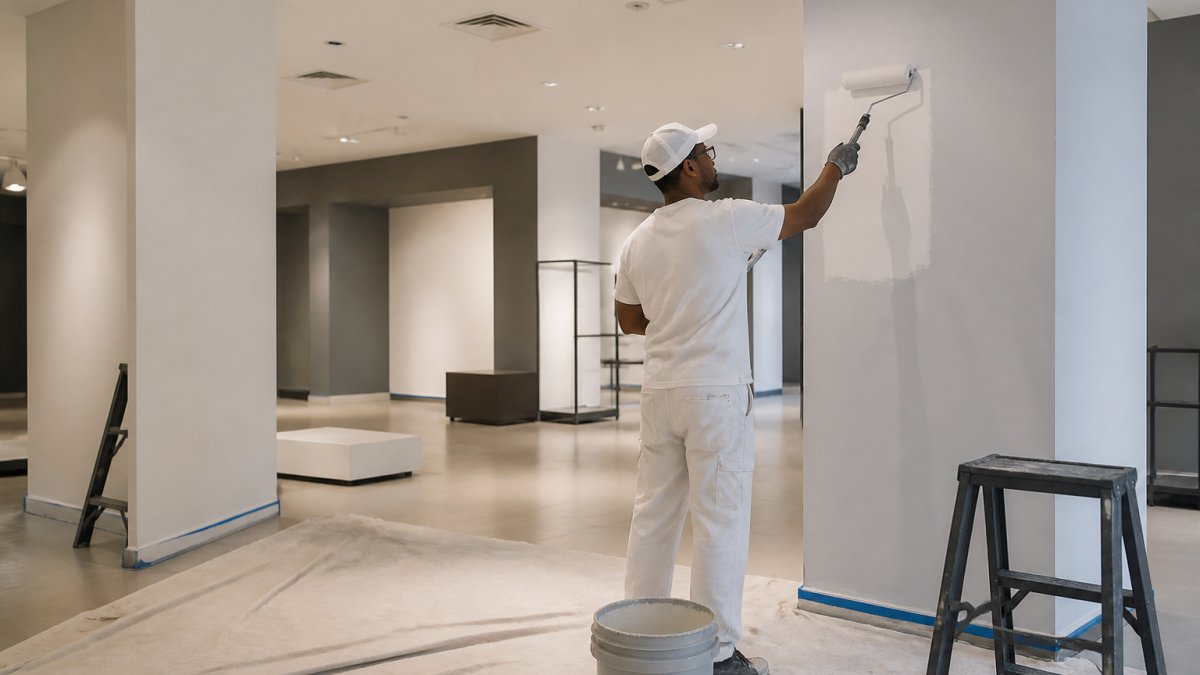
Commercial interior painting for retail spaces is the planned repainting of sales floors, fitting rooms, stockrooms, and customer-facing walls in a store environment, and it does more than refresh the look of a shop.
Walk into two stores selling identical products at identical prices and one will feel worth more. Paint does most of that work. Scuffed baseboards, chipped trim, and dated wall colors read as neglect, and shoppers register it before they reach a shelf.
Retail painting is not residential painting at a larger scale. Stores combine high-traffic surfaces, tight opening deadlines, and brand standards that leave little room for improvisation. Get any one of those wrong and the project costs more than the paint.
Commercial Painting Cost per Square Foot: What Drives the Price
Most commercial painting cost per square foot figures you see online are too vague to budget against. Price depends far more on surface condition and access than on floor area alone. A 2,000-square-foot open sales floor with clean drywall and standard ceiling height prices very differently from the same square footage split into fitting rooms, stockrooms, and shelving-filled aisles.
What moves the number most:
- Surface condition. Patching, sanding, and wall repair add labor before a brush touches the wall.
- Access and protection. Masking fixtures, moving shelving, and covering floors takes time that scales with clutter.
- Height and equipment. Ceilings above standard reach require lifts and extra setup.
- Coat count and primer systems. A stain-blocking primer plus two finish coats costs more than a single refresh coat.
- Scheduling. After-hours work carries a premium because crews work around your operating hours.
Pricing for a specific store depends on quantity, dates, and access. For current prices or a quote, see the LMJ Bright Painting Services pricing page or request a free estimate.
What a Retail Painting Estimate Should Include
A proper retail painting estimate lists the scope in writing before anyone schedules work or takes payment. Our guide on what's included in interior painting estimates explains what a proper estimate should cover before you compare quotes. Ask whether wall repair and door and trim finishing are separate line items or included.
Watch out: a quote with one lump sum and no written scope is where surprise charges come from later. If the estimate does not state what happens when a contractor finds damaged drywall behind a shelf, ask before signing. A clear, itemized scope protects both sides.
How to Choose Paint Colors for Retail Stores
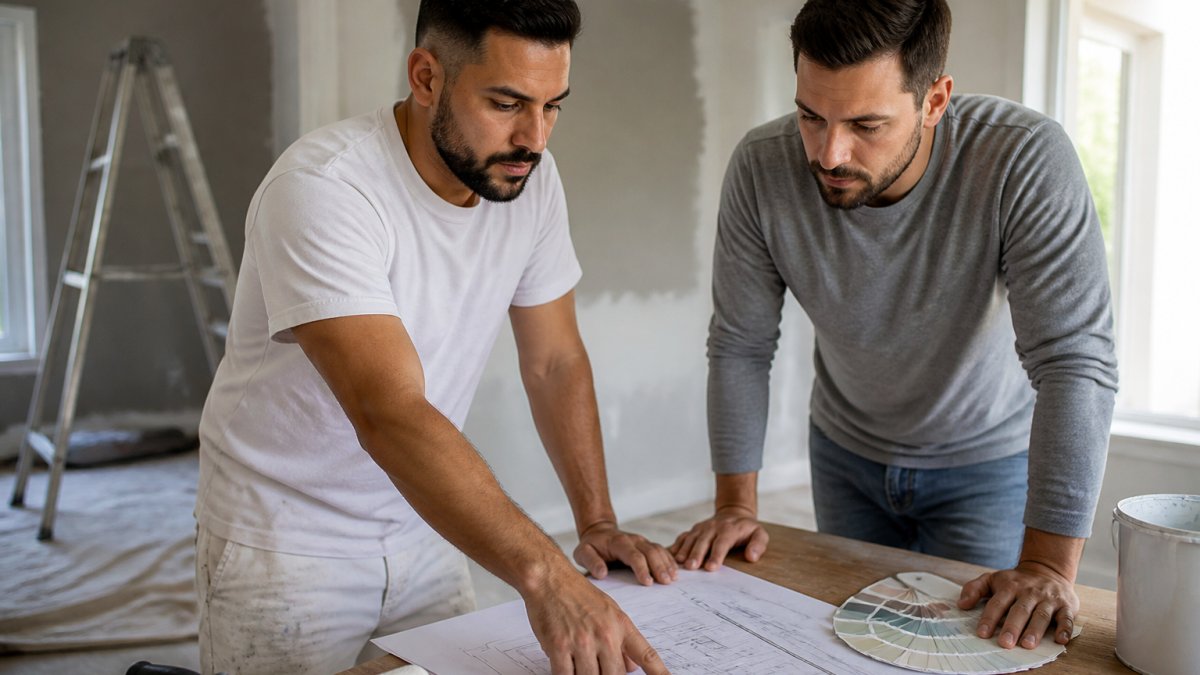
Choosing paint colors for retail stores starts with the merchandise, not the paint deck. The wall color should make products easier to see and the brand easier to recognize, which is why we build palettes around product photography and existing signage rather than trend lists.
Lighting changes the result more than most owners expect. The same paint chip reads differently under fluorescent tubes, LED retrofit lamps, and daylight from a storefront window, and a color approved in a back office can look wrong on the sales floor. Test large samples, at least two feet square, on the actual wall under the actual lighting, and view them at the times of day when the store does most of its business.
A practical sequence that avoids rework:
- Photograph the merchandise and signage under store lighting.
- Shortlist three to five colors that support the product rather than compete with it.
- Paint large samples on the actual walls and live with them for a few days.
- Lock the codes and sheens into the written scope before ordering paint.
Low-VOC and Eco-Friendly Paint Options
Confirm the actual VOC rating on the product data sheet rather than the marketing label, and check that the primer in the system carries the same rating. A low-VOC topcoat over a high-VOC primer defeats the purpose. Ask for the data sheet for every product in the system, primer, finish coat, and any enamel used on trim, and compare the ratings side by side before the order goes in.
Commercial Painting Project Timeline: From Site Inspection to Final Walkthrough
A typical retail repaint moves through five stages: site inspection, written scope and estimate, scheduling and material ordering, surface preparation and application, and a final walkthrough. The painting itself is often the shortest phase. Planning and prep consume most of the commercial painting project timeline, and skipping them is why some projects run long.
| Stage | What Happens | Typical Duration |
|---|---|---|
| Site inspection | Measure areas, assess substrate, note repairs | 1 visit |
| Written scope and estimate | Itemized areas, products, coats, protection | 1-3 business days |
| Scheduling and materials | Confirm dates, order paint and primer | 1-2 weeks lead time |
| Prep and application | Protection, wall repair, priming, coats | Varies by square footage and access |
| Final walkthrough | Punch list, touch-ups, sign-off | Same day or next day |
Working Around Store Hours and High-Traffic Periods
Phasing is the other lever. For a deeper guide on scheduling commercial painting after hours to avoid disrupting business, see our planning guide. Splitting the store into work zones lets you paint the stockroom and back-of-house first, then move to the sales floor in sections. Coordinate the schedule around inventory deliveries and promotions so a paint crew and a truck never need the same aisle on the same morning.
Surface Preparation and Durable Coatings for High-Traffic Surfaces
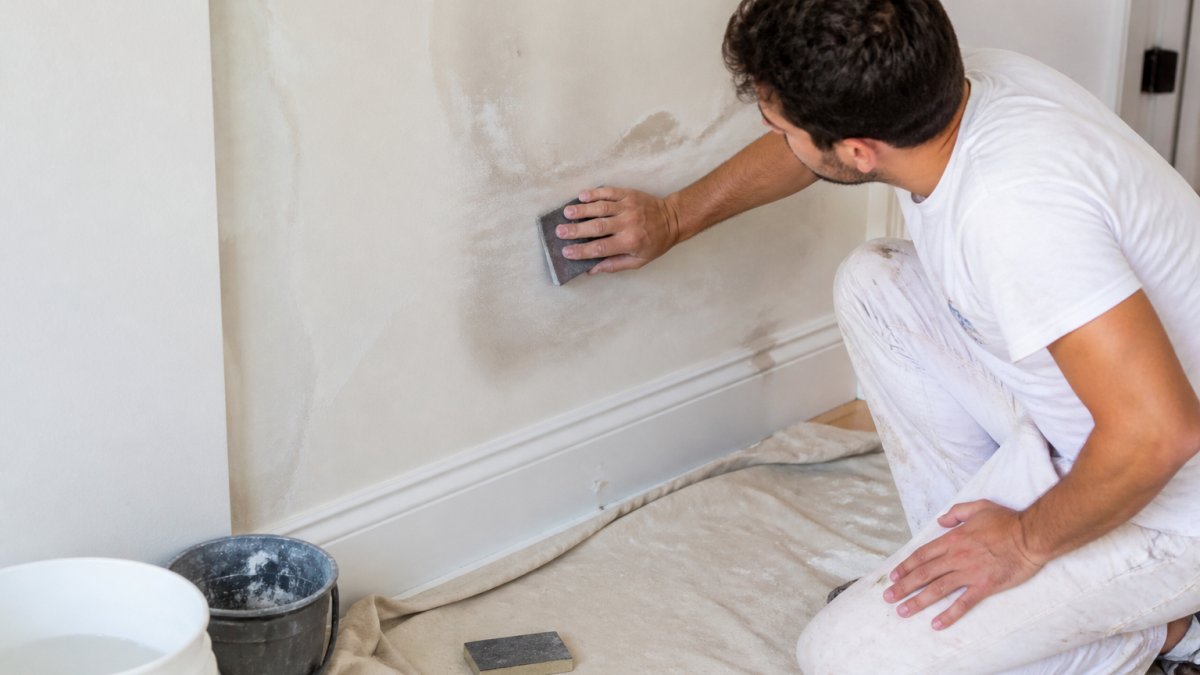
Surface preparation decides whether a retail paint job lasts three years or ten. High-traffic surfaces fail at the prep stage, not the paint stage. Grease, dust, and old glossy coatings prevent adhesion, so the first job is cleaning and deglossing every wall, then patching dents and sanding them flush. A finish coat applied over a contaminated or glossy surface can look perfect on the day of the walkthrough and start peeling within a season, which is why prep is the line item worth scrutinizing in any estimate.
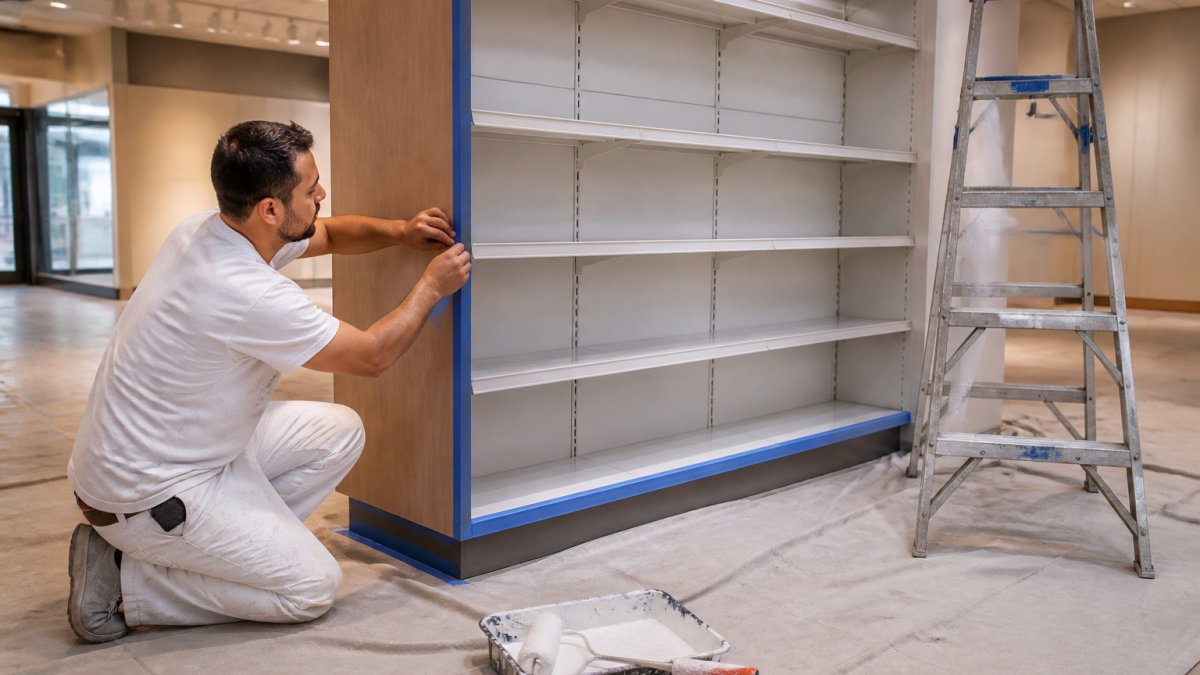
A prep sequence that holds up in a working store:
- Protect first. Mask fixtures, cover floors, and bag shelving before any sanding dust is created.
- Clean and degloss. Wash walls to remove handling oils and dust, then degloss glossy coatings so the new paint can grip.
- Repair. Patch dents, fill fastener holes, and sand patches flush with the surrounding wall.
- Prime. Use a stain-blocking primer over patched drywall so repairs do not flash through the finish.
- Apply finish coats. Two coats over a properly primed surface, with adequate dry time between them.
On high-traffic surfaces like door frames, cart rails, and lower wall sections, a higher-sheen finish in a commercial grade resists scrubbing and scuffing better than flat paint. To learn which paint finishes hold up best on high-traffic retail surfaces, read our guide to interior paint finishes.
A practical sheen guide by surface:
| Surface | Typical Sheen | Why |
|---|---|---|
| Sales floor walls | Eggshell or low-sheen | Scrubbable without a high glare that competes with displays |
| Lower wall sections and cart rails | Higher sheen | Resists scuffing and repeated cleaning |
| Door frames and trim | Enamel | Hardest wear surface in the store |
| Ceilings and back-of-house | Flat or low-sheen | Hides imperfections; less abuse |
| Fitting rooms | Eggshell | Balances cleanability with a softer look |
A common mistake is choosing color first and finish last. Pick the sheen for the abuse the surface will take, then pick the color.
Maintenance Schedules for High-Traffic Retail Environments
A maintenance schedule keeps a store looking freshly painted instead of visibly worn. Most retail spaces benefit from a walkthrough every quarter, touching up scuffs and cart marks before they spread.
Build the schedule around three tiers:
- Quarterly: touch-up paint on lower walls, door edges, and checkout counters.
- Annually: inspect caulk lines, patch dings, and refresh high-abuse trim.
- Every five to seven years: full repaint of the sales floor, with ceilings and back-of-house on a separate cycle.
Keep a labeled touch-up kit on site with the exact product codes from the original scope. Matching a color two years later is far easier when the code is on a shelf rather than in a contractor's file.
Planning Your Retail Interior Painting Project with LMJ Bright Painting Services
Planning is where retail painting projects succeed or fail, and it is the part we spend the most time on. LMJ Bright Painting Services is a veteran-owned company serving commercial property owners and retail spaces, and our process puts the written scope ahead of the schedule and the payment. You can review our commercial interior painting service to see how we structure offices, retail spaces, and phased work zones.
Every project starts with a site inspection and a room-by-room or work-zone plan. You get direct phone and message access to the business owner throughout, and you can tell us what you would like painted to request a quote without measurements or an account.
Frequently Asked Questions
How much does commercial interior painting cost per square foot?
Pricing depends on wall condition, ceiling height, surface preparation, and the coatings you choose, so there is no single rate. A reliable estimate is built after a site inspection that verifies wall repair needs, substrate condition, and access requirements. LMJ Bright Painting Services provides a written scope and transparent cost estimation before scheduling. For current prices or a quote, see the LMJ Bright Painting Services pricing page.
How often should retail spaces be repainted?
Most retail interiors benefit from a full repaint every three to five years, with touch-ups on high-traffic surfaces like entryways, checkout lanes, and fitting rooms in between. Stores with heavy foot traffic or frequent fixture changes may need attention sooner. A maintenance schedule based on a site inspection helps you plan repainting around lease cycles and slow seasons instead of reacting to visible wear.
How do you minimize business disruption during retail painting?
The work is planned in work zones or by room so sales areas stay open while other sections are painted. After-hours and night shift scheduling handles the noisiest prep and application steps, and low-VOC paints reduce odor during operating hours. A written scope confirmed before work starts tells you exactly which zones are affected and when, so staff and customers are not surprised.
What type of paint is best for high-traffic retail environments?
Commercial-grade interior coatings with a washable finish sheen hold up best on high-traffic surfaces such as entry walls, checkout counters, and door and trim finishing. A primer system matched to the substrate improves adhesion and coverage, especially over patched drywall or previously painted metal. Low-VOC options are available in the same durable formulas, so indoor air quality does not have to be traded for wear resistance.
If your store is due for a refresh and you need it done without closing the doors, that is the conversation to start now. LMJ Bright Painting Services provides written scopes before scheduling, transparent cost estimation, room-by-room planning, and after-hours coordination so your business keeps running. Get started with LMJ Bright Painting Services and build a free estimate for your retail space.