 blog
blog
5 Best Interior Paint Finishes for High-Traffic Areas
Table of Contents
- Understanding Paint Sheens and Finishes for High-Traffic Spaces
- Semi-Gloss: High-Traffic Workhorse with Superior Durability
- Satin Finish: The Balanced Choice for Durability and Appearance
- Semi-Gloss vs Satin for High-Traffic Areas: Which Wins?
- Eggshell Finish: The Middle Ground Between Matte and Gloss
- Washable Interior Paint for Hallways: Maintenance Matters
- How to Clean High-Traffic Painted Walls Without Damage
- Preparation and Product Selection: The Real Difference
- Frequently Asked Questions
Last Updated: September 25, 2026
Understanding Paint Sheens and Finishes for High-Traffic Spaces
When choosing paint for hallways, entryways, or stairwells, sheen level matters more than color. Understanding the 5 best interior paint finishes for high traffic areas helps balance durability with appearance.
High-traffic zones demand paint that resists scuffs, stains, and moisture. Higher sheens offer superior washability and durability; lower sheens hide imperfections but sacrifice scrubbability and stain resistance.
Most paint failures occur because property owners chose the wrong sheen for their space, not because they used low-quality paint. The right finish prevents premature wear and keeps walls looking fresh for years.
Semi-Gloss: High-Traffic Workhorse with Superior Durability
Semi-gloss is the most durable interior paint finish available. It reflects significant light, creating a polished appearance that works well on trim, baseboards, and high-traffic walls.
Why semi-gloss excels in high-traffic zones:
- Highest scrubbability rating among interior finishes
- Superior stain resistance and moisture resistance
- Excellent for kitchens, bathrooms, and entryways
- Can withstand aggressive cleaning without dulling
- Resists mildew and moisture penetration
Semi-gloss contains higher resin content, creating a harder, more protective film that resists scuffs, fingerprints, and stains.
The tradeoff is appearance: semi-gloss creates noticeable sheen some find too reflective, and highlights surface imperfections. Proper surface preparation is critical.
Satin Finish: The Balanced Choice for Durability and Appearance
Satin delivers the balance most homeowners want. It offers real durability without the obvious shine of semi-gloss, making it the most popular choice for high-traffic interior walls.
Satin finish sits between eggshell and semi-gloss on the sheen spectrum. It reflects enough light to provide washability while maintaining a sophisticated, subtle appearance. The finish works in hallways, living rooms, and commercial spaces where durability matters but glossy walls feel inappropriate.
Satin's practical advantages:
- Strong scuff resistance and washability
- Hides minor wall imperfections better than semi-gloss
- Provides moisture and stain resistance
- Works well with most interior color palettes
- Touch-ups blend more forgivingly than flat finishes
Satin is ideal for families with children and pets. You can clean satin walls with mild soap and water without dulling the finish, and stains wipe away more easily than from matte or eggshell surfaces.
Satin still requires decent wall preparation; while it hides imperfections better than semi-gloss, poor prep work shows.
Semi-Gloss vs Satin for High-Traffic Areas: Which Wins?
For most homeowners, satin wins the high-traffic battle, but the decision hinges on a factor competitors rarely discuss: repairability and touch-up difficulty. Understanding how each finish behaves during repairs is critical for long-term maintenance.
Repairability Score by Finish:
Satin: Excellent (9/10) Satin finishes are the most forgiving for touch-ups. Because satin has moderate sheen, minor variations in application technique blend into the surrounding wall. A patch applied weeks or months later will integrate reasonably well, especially if you use the same paint batch. The subtle light reflection masks slight differences in texture or sheen uniformity. This is why professional painters recommend satin for homeowners who anticipate future repairs.
Semi-Gloss: Poor (4/10) Semi-gloss is notoriously difficult to repair invisibly. The high reflectivity amplifies any inconsistency in application. A touch-up patch will show as a distinct shiny spot if the surrounding paint has aged, oxidized, or been exposed to different lighting. Even slight variations in film thickness become visible under gloss. Repainting an entire wall section is often necessary to avoid a patchwork appearance. This is why rental properties and commercial spaces accept the aesthetic trade-off, they plan for full repaints rather than spot repairs.
Eggshell: Moderate (6/10) Eggshell falls between satin and semi-gloss. Touch-ups blend better than semi-gloss but not as seamlessly as satin. Aged eggshell can show patched areas if the surrounding paint has dulled slightly from cleaning or UV exposure.
Lighting Impact on Sheen Perception:
Consider how your space's lighting will affect the final appearance.
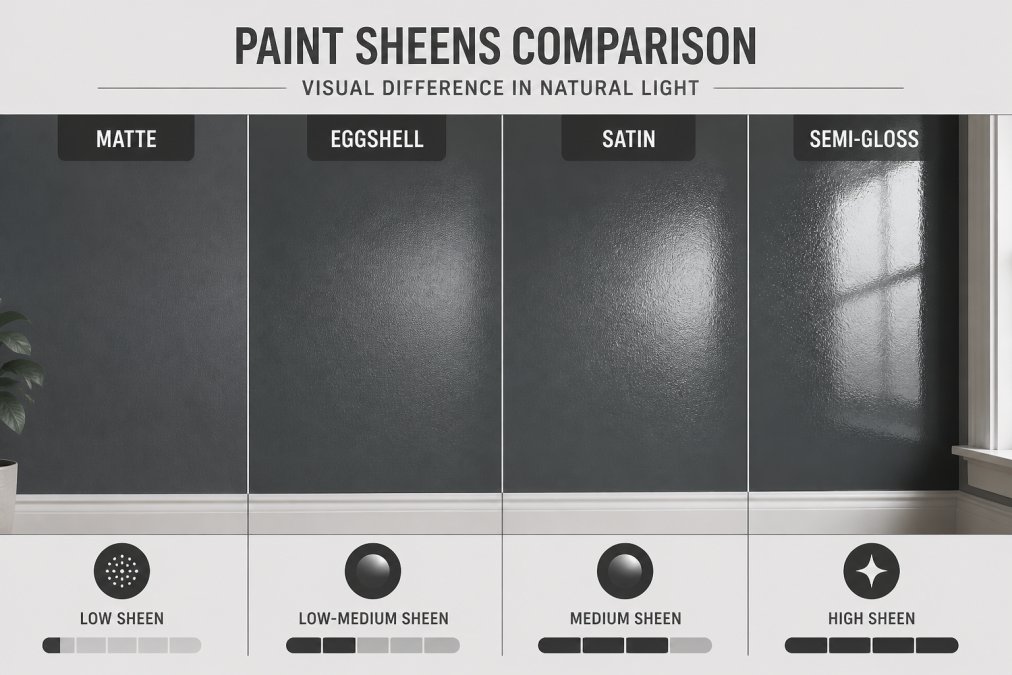
Natural Light Exposure: Abundant natural light amplifies sheen visibility. Semi-gloss in bright spaces appears noticeably glossy; in north-facing areas with minimal light, it appears subdued. If your high-traffic area receives strong afternoon sun, semi-gloss may feel too shiny.
Artificial Lighting: Warm incandescent light softens sheen perception; cool LED or fluorescent light makes semi-gloss appear more reflective. This matters for kitchens and bathrooms where you control lighting type.
Directional Light: Light angle affects sheen visibility. Overhead recessed lighting shows more obvious sheen than side-lit walls. Consider fixture placement when visualizing the final result.
Decision Framework:
Choose satin if:
- You anticipate future touch-ups or repairs (most residential scenarios)
- Your space has abundant natural light and you want to minimize glossy appearance
- You prefer forgiving maintenance and flexibility over maximum durability
- You have minor wall imperfections to hide
- You're uncertain about long-term maintenance commitment
Choose semi-gloss if:
- You need maximum durability and can commit to full-wall repaints for repairs (rental properties, commercial kitchens)
- Moisture exposure is constant and washability is non-negotiable (bathrooms, laundry rooms)
- Your space has minimal natural light, so glossy appearance won't feel overwhelming
- You're willing to invest in meticulous surface prep and accept the aesthetic trade-off
- You plan professional maintenance and repainting on a fixed schedule
Eggshell Finish: The Middle Ground Between Matte and Gloss
Eggshell occupies the space between flat and satin, providing subtle sheen with moderate washability. It suits some high-traffic applications but is not ideal for areas with heavy, sustained wear.
How Eggshell Performs in High-Traffic Zones:
Eggshell reflects light like an actual eggshell: noticeable but not glossy. The finish hides wall imperfections reasonably well while offering better durability than flat or matte paint. Stains and scuffs don't show as readily as on matte surfaces, but eggshell doesn't match satin or semi-gloss for scrubbability and stain resistance.
Eggshell contains moderate resin content (15-25% by volume), creating a film harder than flat but softer than satin.
Burnishing and Durability Limits:
Moisture Resistance and Bathroom/Kitchen Use:
When Eggshell Works for High-Traffic Areas:
- Secondary hallways with moderate foot traffic (not primary entry paths or stairwells)
- Bedrooms that see occasional heavy use but not daily wear
- Living rooms and dining areas where appearance matters more than maximum durability
- Spaces where light reflectance should be minimal and you want to avoid the subtle sheen of satin
- Rental properties with low-turnover tenants where moderate durability is acceptable
Touch-Up and Repair Challenges:
Cost and Product Availability:
Washable Interior Paint for Hallways: Maintenance Matters
Hallways demand washable interior paint for hallways because they absorb daily wear. Footprints, fingerprints, and dust accumulate quickly. The right finish makes maintenance simple.
Washability depends on three factors:
- Sheen level (higher sheens clean better)
- Paint quality and binder type (acrylic latex vs. alkyd)
- Surface preparation (smooth surfaces withstand cleaning)
How to Clean High-Traffic Painted Walls Without Damage
Proper cleaning preserves your paint finish and extends its life. The technique matters as much as the cleaner you use.
Steps for safe wall cleaning:
- Use a soft cloth or sponge (never abrasive scrubbers on satin or semi-gloss)
- Start with plain water for light dust and fingerprints
- Add mild dish soap for stubborn marks (one drop per gallon)
- Wring out excess water before touching the wall
- Wipe in gentle circular motions, not aggressive scrubbing
- Rinse with a clean, damp cloth
- Dry immediately with a soft towel
Preparation and Product Selection: The Real Difference
The difference between paint that lasts five years and paint that lasts ten comes down to preparation and product quality, not the finish you choose.
Proper surface preparation includes:
- Cleaning walls to remove dust and grime
- Repairing holes, cracks, and damage
- Sanding rough spots smooth
- Priming bare or stained surfaces
- Filling gaps and imperfections
Frequently Asked Questions
What type of paint finish is best for high-traffic walls?
Semi-gloss and satin finishes are the top choices for high-traffic areas. Semi-gloss offers maximum scuff resistance and washability, making it ideal for entryways and hallways where walls take frequent contact. Satin provides a strong balance of durability and aesthetic appeal, hiding minor imperfections better than semi-gloss while still delivering excellent stain resistance. The choice depends on your lighting preferences and how much gloss you want visible on your walls.
How do semi-gloss and satin compare for high-traffic areas?
Semi-gloss delivers superior scrubbability and moisture resistance, making it the workhorse for bathrooms, kitchens, and commercial spaces. Satin finishes offer lower light reflectance, which means fewer imperfections show, and they provide excellent durability without the pronounced shine. For rental properties or commercial turnovers, semi-gloss wins on maintenance speed; for residential aesthetics, satin often feels more refined.
Are washable interior paints worth the investment for busy homes?
Yes, especially in high-traffic zones. Washable paints with strong binder content and resin quality resist staining and allow you to clean marks without damaging the finish. Standard flat or matte paints absorb stains and cannot be scrubbed, forcing early repainting. Premium washable finishes cost more upfront but extend the life of your walls by years, reduce maintenance frustration, and maintain their appearance longer in hallways, entryways, and around baseboards where hands, shoes, and furniture contact walls regularly.
What preparation steps make the biggest difference in paint durability?
Surface preparation determines whether any finish performs as intended. Proper cleaning removes dust and contaminants that prevent adhesion. Primer application creates a stable base for topcoat bonding, especially on glossy or stained surfaces. Sanding and filling imperfections ensure uniform film thickness, which affects gloss retention and scuff resistance over time. In high-traffic areas, inadequate prep work causes premature peeling, burnishing, and touch-up failure. This is why written scopes that detail prep steps before work begins protect both the quality and longevity of your investment.