 blog
Which Tampa Painting Companies Are Veteran-Owned?
Last Updated: October 26, 2026
Quick Summary
LMJ Bright Painting Services is a veteran-owned painting company serving Tampa Bay, bringing documented procedures and clear responsibility to residential and commercial jobs. Verify any veteran-owned painting claim by asking whether the owner is veteran-owned or veteran-operated, then confirming the entity, officers, and certification records.
- Verification takes about ten minutes per company and costs nothing, so do it before inviting anyone to walk your property.
- Ask for the certification number, not just the logo, so you can look it up in the issuing program's database.
- Confirm a certificate of insurance by calling the insurer's number printed on it, not a number the contractor provides.
- Simple painting generally does not require a state contractor license, but local registration rules vary by county and municipality.
- A written, line-item estimate should state the number of coats and list prep work separately.
Table of Contents
- Why Veteran-Owned Painting Companies in Tampa Stand Out
- How to Verify a Veteran-Owned Business Before You Hire
- The Painting Contractor Estimate Checklist Every Tampa Homeowner Needs
- Questions to Ask a Painting Contractor Before Signing
- What a Realistic Painting Project Timeline Looks Like
- Licensing, Insurance, and Contractor Checks in Florida
- Build a Free Estimate with a Veteran-Owned Tampa Painter
- Frequently Asked Questions
Why Veteran-Owned Painting Companies in Tampa Stand Out
Veteran-owned painting companies in Tampa bring structure to residential and commercial work that homeowners notice in the first week.
That matters because painting is a trust purchase. The U.S. Small Business Administration's guidance on veteran-owned business certification explains how ownership status is formally recognized, which is useful context before you take any contractor's word for it.
Discipline shows up in small things: a veteran-operated crew walks the space before quoting, writes the scope down, and protects floors and furniture before opening a can.
The Tampa Bay market is crowded with painting contractors, many excellent.
How to Verify a Veteran-Owned Business Before You Hire
Most pages ranking for this query either list painting companies with no ownership evidence or repeat a company's own "veteran-owned" badge without checking it.
Verification takes about ten minutes per company and costs nothing. Do it before inviting anyone to walk your property.

Step 1: Separate "Veteran-Owned" from "Veteran-Operated"
- Veteran-owned means veterans hold majority ownership and control of the business. This is the stronger claim because it is tied to who profits from and directs the company.
- Veteran-operated means veterans run day-to-day operations, scheduling, crews, estimating, but may not own a controlling share.
Ask which applies, then follow up: "Who specifically?" A legitimate answer names a person and a role; a marketing answer stays vague. If a company claims veteran ownership, the owner should say so directly and, where applicable, point to a certification record.
Step 2: Confirm the Entity and Its Officers
Start with the state business entity search to confirm the company is registered, active, and in good standing. The filing shows the entity type, formation date, registered agent, and officers or managers. Cross-check the names against what the company told you. A company that cannot produce a registered entity, or whose listed officers do not match its ownership claim, deserves harder questions.
Step 3: Check for Third-Party Veteran Certification
The U.S. Department of Veterans Affairs' Veteran Small Business Certification program maintains a searchable database of certified veteran-owned small businesses. Certification is voluntary, so absence from the database is not proof of a false claim, but a company that appears there has had ownership and veteran status reviewed by a third party. The U.S. Small Business Administration's guidance on veteran-owned business certification explains how ownership status is formally recognized and which certifications carry weight.
Step 4: Build a Side-by-Side Comparison
Rather than judging companies one at a time, put your shortlist in a single table and fill in the same fields for each.
| What to Compare | Where to Get It | Red Flag |
|---|---|---|
| Ownership claim (veteran-owned vs. veteran-operated) | Direct question to the owner | Vague answer, no named person |
| Entity status and officers | State business entity search | Inactive entity or mismatched names |
| Veteran certification | VA certification database or certificate number | Logo with no lookup-able record |
| License held (if any) | State licensing database | Claims a license it does not hold |
| General liability insurance | Certificate of insurance from the insurer | Expired policy or limits not shown |
| Workers' compensation | Certificate or state coverage check | Crew on site with no coverage |
| Written estimate with line-item scope | The company's own quote | Lump-sum price with no scope |
| Review themes and dates | Public review profiles | Only undated or anonymous praise |
| Service area and response time | Company site and a direct call | No local address or references |
Fill the table in yourself, using evidence you gathered independently, the point is to compare like with like.
Step 5: Verify Insurance and Bonding at the Same Time
Ask for a certificate of insurance and confirm it is current by calling the insurer's number on the certificate, not the number the contractor gives you. It should name the policyholder, show general liability limits and workers' compensation coverage, and carry an expiration date. Ask whether the company is bonded and get the answer in writing.
What Verification Does and Does Not Tell You
Verification confirms an ownership claim is real and the business is registered and covered. It does not tell you whether the crew preps well, communicates clearly, or finishes on schedule. Pair these steps with a written, line-item estimate and a walkthrough before you sign, veteran ownership is a useful signal, not a substitute for scope, insurance, and references.
The Painting Contractor Estimate Checklist Every Tampa Homeowner Needs
A legitimate painting estimate states the scope in writing before anyone schedules work. Use this checklist to compare quotes line by line:
- Surfaces named room by room, including ceilings, trim, doors, and closets
- Prep work listed separately: patching, sanding, caulking, priming
- Paint brand, product line, and sheen specified per surface
Missing items matter more than the total. A quote that omits prep or primer is not cheaper; it is incomplete. Our guide to what's included in interior painting estimates walks through each line, and avoiding hidden costs in painting estimates covers the add-ons that inflate a final bill.
Questions to Ask a Painting Contractor Before Signing
Ask these five questions and listen for specifics, not reassurance:
- Who will be on site? You want to know whether the owner's crew does the work or whether it is subcontracted.
- What happens if you find rot, water damage, or failing caulk? The answer should describe a written change order and a pause for approval.
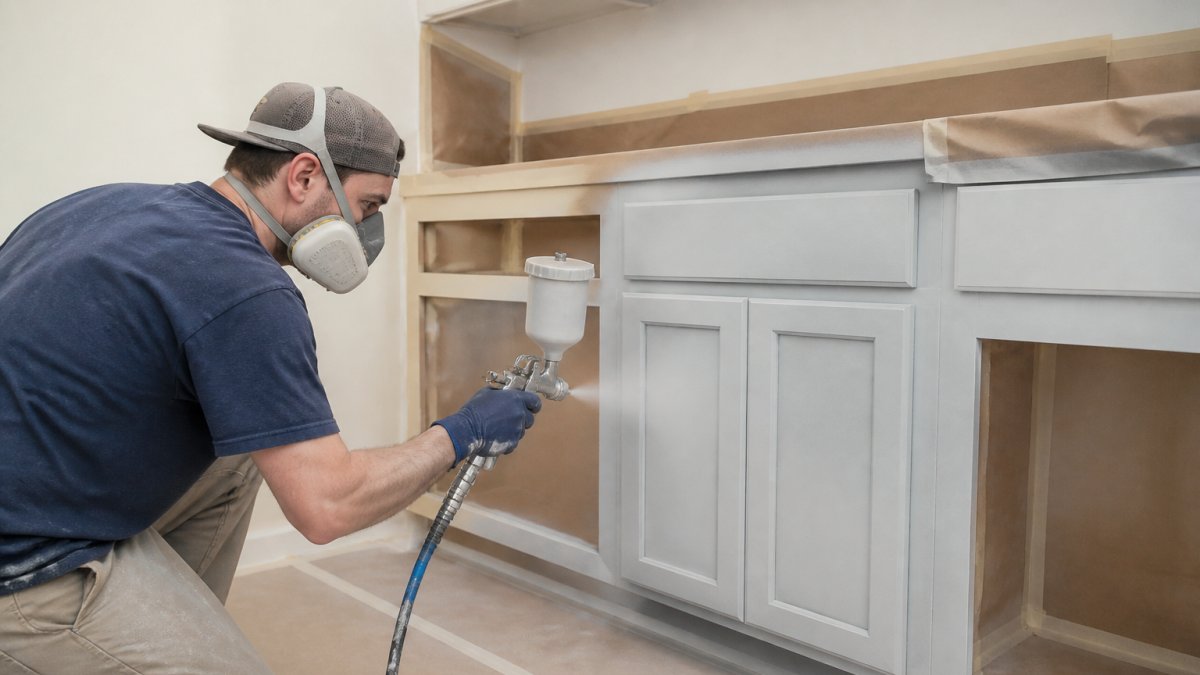
- How do you prep cabinets? Proper cabinet work involves degreasing, sanding, and a bonding primer. A crew that skips prep is why cabinet paint peels in a couple of years.
- Can you work around business hours? Commercial clients need this answered before signing, not after.
- What does the warranty cover, and for how long?
If you are still comparing local options, our guide to hiring local interior painters in Tampa covers the vetting process in more depth.
What a Realistic Painting Project Timeline Looks Like
Timelines depend on square footage, prep condition, and drying time, so treat any single number with suspicion. A common approach sequences prep, prime, and finish coats with a day of cure between heavy coats, then reserves a final walkthrough for touch-ups.
Interior, Cabinet, and Commercial Timelines Compared
| Project Type | Typical Sequence | Main Variable |
|---|---|---|
| Single interior room | Prep, prime, two coats, touch-up | Drywall condition |
| Whole-home interior | Room-by-room or zone-by-zone | Furniture moving and access |
| Cabinet refinishing | Degrease, sand, prime, two finish coats | Door removal and cure time |
| Commercial interior | Off-hours phased work | Business operating hours |
Cabinet work takes longer because doors and drawers come off, get sprayed or rolled flat, and need to cure before reassembly. Commercial jobs stretch out because crews work in phases to keep the space open.
Licensing, Insurance, and Contractor Checks in Florida
Painting is lightly licensed compared with trades like electrical or plumbing, which is exactly why homeowners must do more checking themselves.
Licensing: What Applies to Painting
Simple painting and decorating generally does not require a state contractor license, but the picture changes with scope:
- Structural or specialty work, if a project touches structural repair, mold remediation, or certain specialty coatings, licensing requirements can apply.
- Local rules vary by county and municipality. Some jurisdictions require registration or a local business tax receipt even when the state does not require a license. Ask the company which local registrations it holds for your address.
- Company name vs. license name. If a company holds a license, the name on the license should match the name on your contract. A mismatch is a question to resolve before signing.
Check any license the company claims through the state professional regulation database. Search by the company name and by the individual's name. If nothing comes back, ask the company to explain what it holds and where it is registered.
Insurance: The Three Coverages That Matter
Ask for a certificate of insurance and read it line by line. Three coverages matter:
- General liability, covers damage to your property, such as overspray on a car, a spilled can on flooring, or damage to landscaping. Confirm the policy is active and the limits are stated.
- Workers' compensation, covers crew members injured on your property. This is the coverage homeowners most often forget to check and the one that carries the most personal exposure if it is missing.
- Commercial auto, covers company vehicles and, in some policies, trailers and equipment. Less critical than the first two, but worth confirming for larger jobs.
How to Confirm Coverage Is Real
A certificate of insurance is easy to fake. Confirm it independently:
- Call the insurer's phone number printed on the certificate, not a number the contractor provides, and ask whether the policy is active and the limits match.
- Check the expiration date against your project dates. A policy that lapses mid-project leaves you exposed.
- Ask to be listed as an additional insured for the duration of the project if the job is large. Not every insurer will do this for residential work, but asking reveals how the company handles coverage questions.
Contractor Checks Beyond License and Insurance
Credentials are the floor, not the ceiling. Run these checks before signing:
- Written contract. The scope, price, payment schedule, start and finish dates, and warranty terms should all appear in one document you keep.
- Payment schedule. Deposits are common, but a schedule tied to milestones, prep complete, primer complete, finish coats complete, protects you better than a large payment up front.
- Change-order process. Ask in writing how the company handles discovered rot, water damage, or failing caulk. The answer should involve a written change order and your approval before work continues.
A Quick Pre-Hire Checklist
- Entity confirmed in the state business search
- Veteran ownership claim verified (see the section above)
- Any claimed license confirmed in the state database
Work through the list in order. Each item takes minutes, and together they close most of the gaps that turn a painting project into a dispute.
Build a Free Estimate with a Veteran-Owned Tampa Painter
The gap between a smooth project and a stressful one usually comes down to what was written down before the first brush touched the wall.
LMJ Bright Painting Services plans every job room by room or zone by zone, verifies the space in person before final pricing, and hands you a written scope before scheduling or payment. Start with interior painting in Tampa, FL, or tell us what you would like painted and we will follow up with a walkthrough.
Frequently Asked Questions
How do I verify that a painting company is veteran-owned?
Ask for the owner's name and check it against public records. In Florida, you can look up the business on the state's Division of Corporations Sunbiz database to confirm ownership, then ask whether the owner has a DD-214 or a service-connected designation they are willing to share. Certification through the U.S. Small Business Administration's Veteran-Owned Small Business program or a state veteran business certification adds another layer of proof. A company that answers these questions directly and without hesitation is usually the real thing.
What should a professional painting estimate include?
A written estimate should list the rooms or work zones, square footage, surface preparation steps, number of coats, paint brand and product line, trim and cabinet work, protection of floors and furniture, cleanup, and the payment schedule. Ask whether the price is fixed or subject to change if hidden damage appears, and get that answer in writing. A painting contractor estimate checklist with these items lets you compare bids fairly instead of guessing why one quote is lower.
Do painting contractors in Florida need to be licensed and insured?
Always ask for a certificate of general liability insurance and workers' compensation coverage, and call the insurer to confirm the policy is active. Uninsured crews can leave you responsible for injuries on your property.
How long does it take to paint a house interior?
Most interior repaints take two to five days for an average home, depending on square footage, ceiling height, drywall repair, and how many colors are involved. Cabinet refinishing usually adds three to five days because doors and drawers need to be removed, cleaned, sanded, and cured. Ask for a painting project timeline in writing with a start date, daily work hours, and a completion target so you can plan around the crew.