 blog
Paint Corps Alternatives for Residential Painting
Last Updated: November 11, 2026
Quick Summary
A strong paint corps alternative for residential painting is a contractor with current licensing and insurance, a written warranty, a focus on home work, and a detailed written scope. Confirm these in writing and verify the scope in person before any price is locked in.
- Request current liability and workers' compensation certificates and confirm the policies are active.
- Get the warranty in writing, including whether it covers labor and materials and how claims are filed.
- Ask what share of recent jobs were residential and whether home crews are dedicated.
- Insist on a room-by-room written scope before scheduling or making any payment.
- Compare estimates on stated assumptions such as coats, primer, paint grade, and cleanup, not just price.
Table of Contents
- Why Homeowners Look for a Paint Corps Alternative
- What to Compare When Choosing a Residential Painting Contractor
- Questions to Ask an Interior Painter Before You Sign
- How Interior Painting Contractor Estimates Should Read
- Residential Painting Cost by Square Footage
- Preparation, Protection, and Cleanup Standards
- Booking Your Free Estimate with LMJ Bright Painting
- Frequently Asked Questions
Why Homeowners Look for a Paint Corps Alternative
Homeowners in Tampa Bay often start searching for a paint corps alternative for residential work after a bad experience, a quote that climbed mid-project, or a crew that never showed. Others simply want a contractor who feels more personal and less like a franchise. Either way, the search comes down to one question: who will protect the home and deliver what was promised?
Many residential owners find that the biggest frustration is not the paint itself. It is hidden costs, vague scopes, and poor preparation that shows up months later as peeling cabinet finishes or uneven walls. A clear process matters more than a famous name.
LMJ Bright Painting Services is a veteran-owned interior painting business serving the Tampa Bay area. Our approach starts with a written scope and an in-person review before any price is locked in, so the homeowner knows exactly what is included.
What to Compare When Choosing a Residential Painting Contractor
Choosing a residential painting contractor involves more than comparing quotes. Credentials, insurance, warranty terms, and whether a firm actually focuses on homes all affect how much risk you carry once work begins.
Verify licensing and insurance first. Confirm what your area requires and ask the contractor to show current documentation rather than relying on a verbal assurance. Request a certificate of general liability insurance and a certificate of workers' compensation coverage, and check that the policy is active.
Ask about warranties in writing. Clarify what the warranty covers, how long it lasts, and whether it covers both labor and materials. Note whether the warranty is backed by the company itself or by a paint manufacturer, since those are different protections. Ask what the process is for filing a claim.
Check background and reference practices. Ask whether crew members are background-checked and whether the company uses employees or subcontractors. You should know who is accountable for the work and who you call if a problem appears.
Confirm the firm focuses on residential work. Some painting companies handle large commercial projects alongside homes. That is not automatically a problem, but the two markets use different scheduling, materials, and crew structures. Ask what percentage of recent jobs were residential, whether the crew assigned to your home is the same one that works on commercial sites, and how they protect finished floors, fixtures, and occupied living spaces.
Use a comparison checklist. The table below helps line up factors across several bids:
| Factor | What to Verify |
|---|---|
| Licensing | Current license for your area, shown in documents |
| Insurance | Liability and workers' compensation certificates on file |
| Warranty | Written terms: duration, coverage of labor and materials, claim process |
| Residential focus | Share of recent residential jobs and dedicated home crews |
| Scope | Room-by-room or surface-by-surface detail in writing |
| Communication | A named contact and a stated response timeline |
Watch out: a low bid that omits insurance or a written warranty often shifts the cost of mistakes to you later, so compare the protections alongside the price.
Questions to Ask an Interior Painter Before You Sign
Before you sign anything, ask direct questions. Good painters welcome them. Start with these:
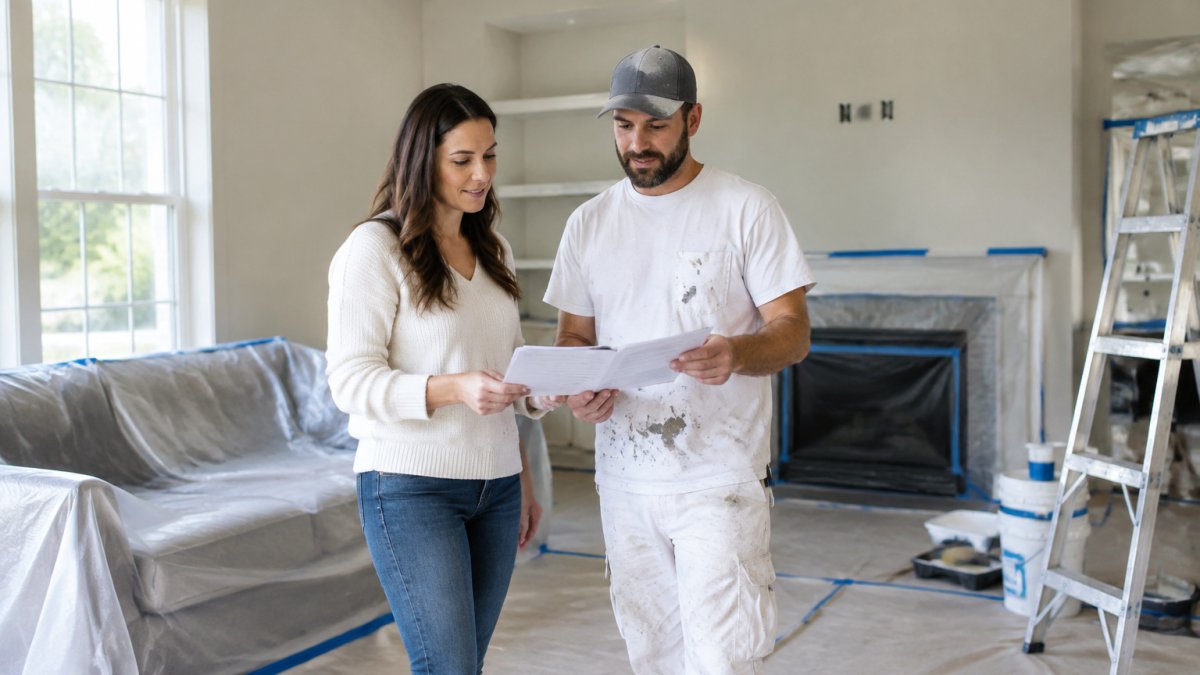
- Will you verify the scope in person before giving a final price?
- What surfaces are included, such as walls, ceilings, trim, doors, and cabinets?
- Who will be on site, and will I meet them before work begins?
- How do you handle hidden issues like water damage or drywall repair you find after starting?
- What preparation steps are included, and what is extra?
A common mistake is accepting a verbal promise with no written scope. Ask for the scope in writing before scheduling or payment. If a contractor resists, treat that as a warning sign.
How Interior Painting Contractor Estimates Should Read
A strong estimate reads like a plan, not a sales pitch. It should list the rooms or zones, the surfaces in each, the preparation included, the paint type, and any exclusions. It should also state how changes will be handled if the scope shifts.
Watch for estimates that give one lump sum with no breakdown. That format makes it hard to compare quotes and easy for surprise charges to appear later. Ask the painter to explain each line in plain terms before you decide.
Residential Painting Cost by Square Footage
Square footage is only one input in a residential painting quote, and it is rarely the most important one. Two homes of the same size can produce very different estimates because the surface area being painted, the condition of that surface, and the amount of preparation required vary widely.
The main cost drivers most homeowners should expect to see addressed in an estimate are:
- Wall and ceiling area. Measured surface area, not floor area, determines how much paint and labor the job needs. A room with 9-foot ceilings and a room with 12-foot cathedral ceilings of the same floor size are different jobs.
- Number of rooms and transitions. Each room requires moving furniture, masking, cutting in at edges, and cleanup. Many small rooms usually cost more per square foot than one large open area.
- Trim, doors, and cabinets. Trim and doors are labor-intensive relative to their surface area. Cabinets often require sanding, degreasing, priming, and multiple coats, so they can add a significant share of the total price.
- Surface condition. Patching holes, repairing cracks, scraping loose paint, and addressing stains before priming all add time. Surfaces that look fine from a distance often need more preparation than expected.
- Paint and primer selection. Stain-blocking primers, specialty finishes, and deep-color changes that need extra coats each change material and labor requirements.
- Access and occupancy. Furnished, occupied homes take longer than empty ones because furniture must be protected and moved around daily.
When comparing quotes, the most useful step is to check whether each estimate states its assumptions. A quote should say how many coats are included, whether primer is included on new drywall or repaired areas, what the paint grade is, and whether furniture moving and cleanup are part of the price. Two estimates that differ by a large margin often differ in one of these assumptions rather than in the price of the work itself.
For a preliminary planning figure before you request a walkthrough, LMJ Bright Painting Services offers a free smart interior painting cost estimator. A firm number still requires an in-person review of the actual surfaces, because condition and preparation can only be judged on site.
Preparation, Protection, and Cleanup Standards
Preparation drives the final result more than the paint brand. Surfaces should be cleaned, patched, sanded where needed, and primed before the topcoat goes on. Furniture, floors, and fixtures should be covered, and tape should be removed cleanly once the work is complete.
Cleanup belongs in the scope too. Ask whether the crew removes drop cloths, tape residue, and debris at the end of each day, and whether the final walkthrough happens before the crew leaves.
Booking Your Free Estimate with LMJ Bright Painting
If you are comparing options in Tampa Bay, start with a clear scope and an in-person review. You can review the full range of interior wall, ceiling, trim, and door painting we handle for homes, condos, and occupied properties before requesting an estimate. LMJ Bright Painting Services provides interior, cabinet, and commercial painting with written scopes, careful preparation, and direct access to the owner. You can tell us what you would like painted and request a free estimate.
Our interior painting service covers walls, trim, and cabinetry for homes and occupied properties. For Tampa-area projects, you can review interior painting options in Tampa, FL before requesting a walkthrough.
Before you decide, it helps to compare painting quotes and prepare your inquiry so your next conversation covers the details that matter. If you want to estimate your own project first, try our free interior painting cost estimator to get a preliminary planning range by room or square footage.
Choosing a residential painter should not feel like a gamble. Get a written scope, a verified estimate, and a crew you can reach. Get started with LMJ Bright Painting Services for a free estimate built around your home.
Frequently Asked Questions
How much does it typically cost to paint a 2,000 square foot house?
Cost depends on wall area, number of rooms, prep condition, and whether trim and cabinets are included. Square footage is only one input, so a square-foot figure alone will not tell you what a specific house will cost. Request a written estimate that breaks out scope, preparation, and cleanup so you can compare quotes on the same basis. For current pricing on LMJ Bright Painting services, check the pricing page on the company website or request a free estimate.
What should a residential painting estimate include?
A complete estimate lists the rooms or work zones covered, the surfaces to be painted, the preparation steps such as patching, sanding, and priming, the number of coats, the paint product and sheen, and the cleanup and protection of floors and furnishings. It should also state the schedule and payment terms. Vague totals with no scope attached make comparisons difficult, so ask for the scope in writing before you agree to a price.
How can I check a painting contractor's reviews and references?
Read reviews across several platforms rather than relying on one site, and look for patterns in how the contractor handled schedule changes, surprises in pricing, and cleanup. Ask for recent references from projects similar to yours, and confirm that the business carries liability insurance and workers' compensation. Verifying licensing and insurance before work begins protects you if something goes wrong on the job.
What questions should I ask before hiring an interior painter?
Ask who will be doing the work and whether the company uses its own crew or subcontractors. Ask how the estimate was produced, whether anyone will check the site in person before final pricing, what is excluded from the scope, and how changes are priced. Confirm the schedule and how the crew will protect your furniture and floors. Clear answers to these questions reduce the risk of hidden charges and surprises during the project.