 blog
5 Affordable Kitchen Cabinet Refinishing Alternatives
Table of Contents
- Why Kitchen Cabinet Refinishing Alternatives Matter
- Painting Kitchen Cabinets: The Most Cost-Effective Refresh
- Cabinet Refinishing and Staining for a Natural Look
- Ways to Update Kitchen Cabinets Without Replacing Them
- Kitchen Cabinet Refacing Cost and What to Expect
- Kitchen Cabinet Hardware Ideas: An Affordable Upgrade
- Choosing the Right Alternative for Your Cabinets
- Frequently Asked Questions
Last Updated: October 18, 2026
Why Kitchen Cabinet Refinishing Alternatives Matter
Your kitchen cabinets take a beating. They're exposed to moisture, heat, grease, and daily wear that fades finishes and dulls surfaces over time. A full cabinet replacement can cost thousands of dollars and require weeks of disruption. But here's what most homeowners miss: you don't need to replace them. The right kitchen cabinet refinishing alternatives can transform your space for a fraction of that cost.
At LMJ Bright Painting Services, we've helped homeowners who thought replacement was their only option discover that strategic updates, painting, refacing, hardware changes, or a combination of approaches can deliver the visual impact they want without the expense or timeline of a gut renovation. The key is matching the right alternative to your cabinet's actual condition and your budget.
We'll walk you through five proven approaches, from the most affordable to the middle-ground solutions, so you can make an informed choice for your kitchen.
Painting Kitchen Cabinets: The Most Cost-Effective Refresh
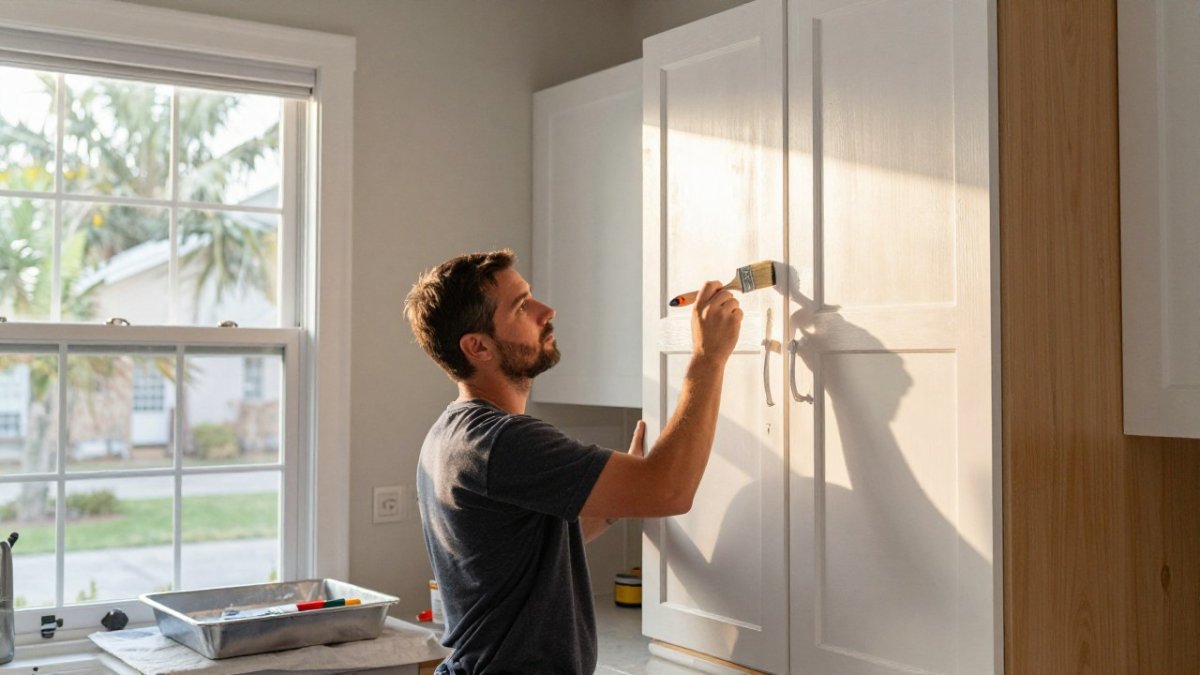
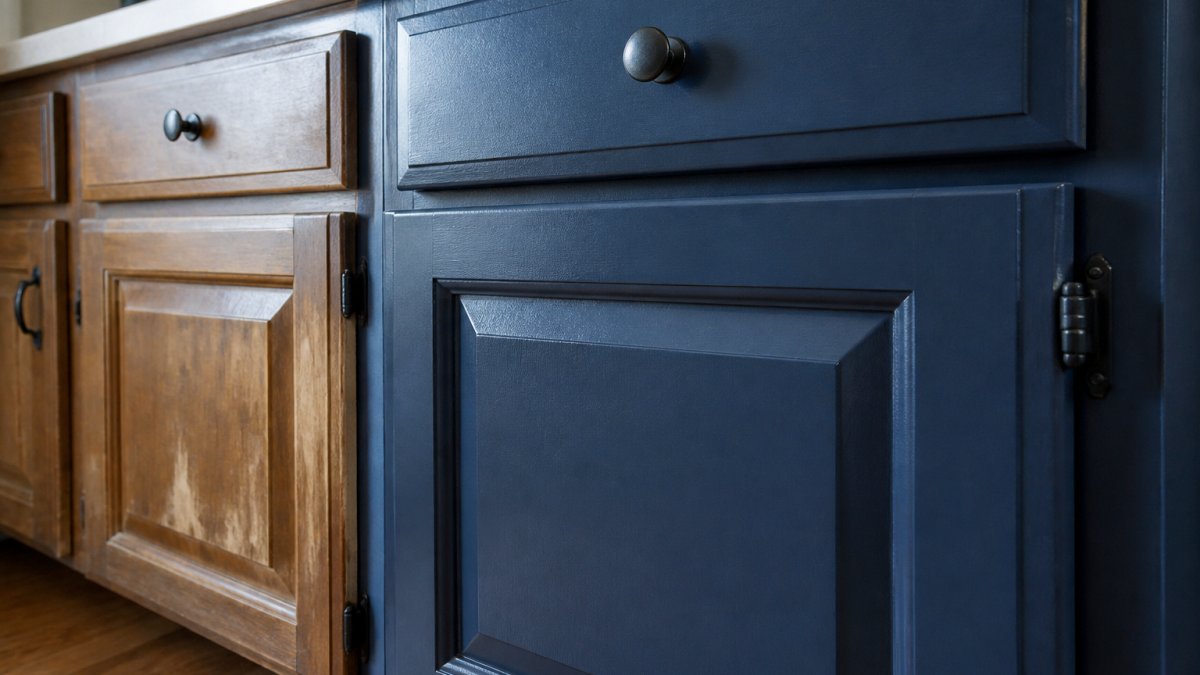
Painting is the fastest, most affordable way to refresh tired cabinets. A fresh coat of paint transforms worn wood or outdated finishes into a modern focal point. This is where most cabinet updates begin because the investment is low and the visual return is immediate.
Prep Work and Surface Preparation
The difference between paint that lasts five years and paint that peels in two comes down to preparation. Most homeowners, and some contractors, skip this step to save time. That's the mistake.
Proper prep means cleaning cabinets thoroughly to remove grease and grime, sanding the existing finish to create adhesion, filling gaps or damage, and protecting everything else in the kitchen. It's tedious work, but it determines whether your paint holds up to daily use. Proper preparation often involves a significant portion of the project time, focusing on prep rather than just applying paint.
The cabinet material matters too. Solid wood, plywood, laminate, and veneer all require slightly different approaches. Wood accepts paint readily if sanded properly. Laminate and veneer need a bonding primer designed for slick surfaces. Skipping this detail is why DIY cabinet painting often fails.
DIY vs. Professional Painting
You can paint cabinets yourself. The question is whether you should, given your timeline and tolerance for imperfection.
DIY painting takes time. If you have a small kitchen and patience, a weekend project might work. But most kitchens require 3-5 days of active work: prep, priming, first coat, second coat, hardware reinstallation, and reassembly. Your kitchen is partially unavailable during this period. You'll also need to invest in quality paint, primer, brushes, and protective materials, costs add up quickly when you're buying professional-grade supplies.
Professional painting handles the prep, execution, and cleanup systematically. A professional painter brings the right tools and knows how to handle different cabinet materials. The timeline is defined upfront.
Cabinet Refinishing and Staining for a Natural Look
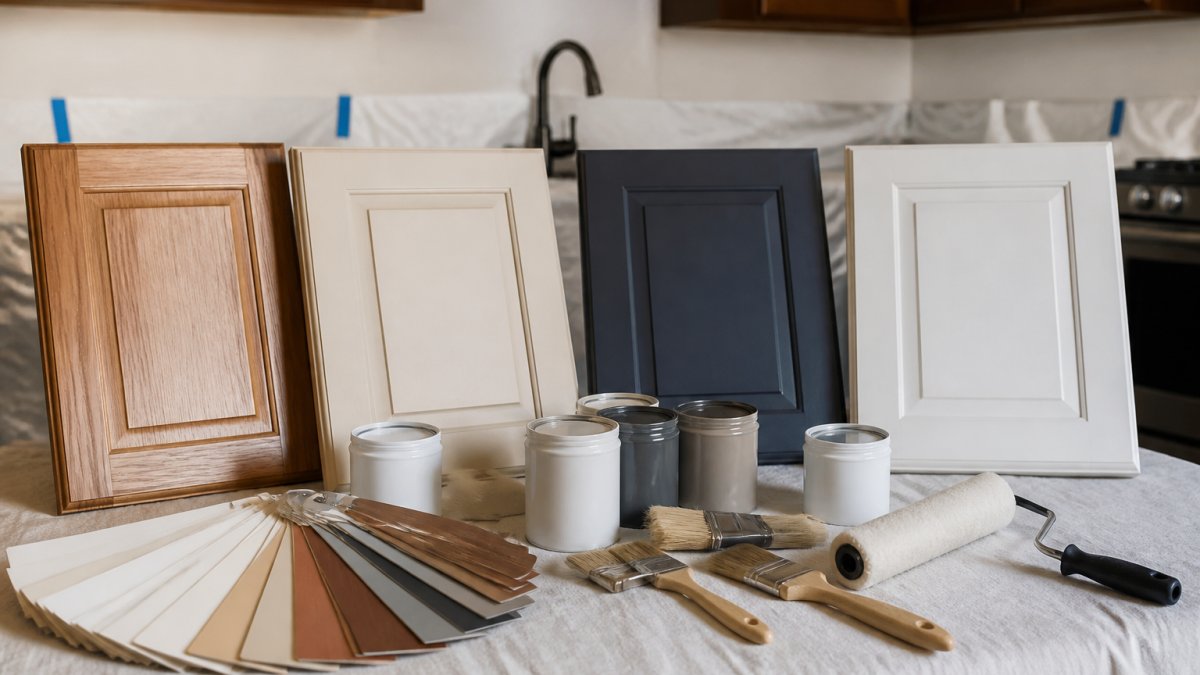
If you want to keep the natural wood grain visible but change the color or restore the finish, refinishing and staining is the alternative. This approach strips or sands away the old finish and applies a new stain and topcoat, revealing or enhancing the wood's natural character.
Refinishing works best on solid wood cabinets in good structural condition. If your cabinets are veneer or laminate, this approach won't work, those materials don't accept stain the way solid wood does.
The process is more involved than painting. It requires sanding the entire cabinet surface, which creates dust and takes time. You then apply stain (which can be customized to any shade) and seal it with polyurethane or another topcoat.
This is rarely a DIY project unless you have woodworking experience. The dust control alone is a challenge in an active kitchen. Professional refinishing teams have dust containment systems and know how to sand evenly without damaging the wood underneath.
Ways to Update Kitchen Cabinets Without Replacing Them
Beyond painting and refinishing, there are several other ways to update cabinets without a full replacement. These alternatives work well in combination or as standalone updates depending on what your cabinets need.
Cabinet Refacing: A Middle Ground
Cabinet refacing replaces the cabinet doors and drawer fronts while keeping the existing cabinet boxes. It's a middle ground between painting and full replacement. You get new doors in a style and finish of your choice, new hardware, and often a new veneer or finish on the visible frame.
Refacing works when your cabinet boxes are structurally sound but the doors and fronts are worn, dated, or damaged. You keep the interior storage and layout intact, which means your kitchen function doesn't change, only the appearance does. This is often faster than a full replacement because you're not removing and reinstalling cabinetry.
The cost is higher than painting but significantly lower than replacement. You're paying for new doors and installation, not for new cabinet construction. The timeline is typically a few days to a week, depending on how many doors you're replacing and whether the new doors are custom or semi-custom.
Replacing Cabinet Doors and Drawer Fronts
A simpler version of refacing is replacing just the doors and drawer fronts while keeping the existing finish on the cabinet boxes. This works if your boxes are in good shape but the doors are damaged, stained, or just outdated.
You can source replacement doors from cabinet suppliers, home improvement stores, or online retailers. Some are semi-custom (standard sizes with limited finish options), others are fully custom. Semi-custom doors are faster and cheaper; custom doors take longer but offer more design flexibility.
Installation is straightforward if you're comfortable with basic tools. You remove the old doors, install hinges on the new ones, and hang them. The challenge is getting the hinges aligned so the doors hang evenly.
This approach is ideal for renters or anyone who wants a quick, reversible update. It's also useful if your doors are damaged but the boxes and hardware are fine.
Kitchen Cabinet Refacing Cost and What to Expect
Cabinet refacing costs vary based on the number of doors, the type of doors you choose, and whether you hire a professional or do it yourself. Semi-custom doors from home improvement stores typically range from $50 to $200 per door.
Installation, if you hire it out, adds labor costs. A professional can typically replace doors and hardware in a day or two, depending on your kitchen size.
The advantage of refacing is that it's faster than a full cabinet replacement and doesn't require the same level of kitchen disruption. You're also not replacing perfectly good cabinet boxes, which reduces waste and keeps costs down.
When you're evaluating refacing, ask the supplier or contractor for a timeline and a detailed scope. What's included? Are hinges, handles, and installation part of the price? What happens if a door arrives damaged? These details matter when you're planning your kitchen project and your budget.
Kitchen Cabinet Hardware Ideas: An Affordable Upgrade
Sometimes the smallest changes have the biggest visual impact. Replacing cabinet hardware, knobs, pulls, and hinges, is one of the cheapest ways to refresh your cabinets. A new set of handles can change the entire aesthetic from dated to modern in an afternoon.
Hardware comes in endless styles: modern minimalist, farmhouse, industrial, vintage, and everything in between. Prices range from a few dollars per piece to $20 or more for high-end designer hardware.
The installation is simple. You remove the old hardware, fill any old holes if the new hardware doesn't align, drill new holes if needed, and install the new pieces. It's a weekend project for most kitchens.
This is also the easiest update to reverse or change later. If you're renting, unsure about your long-term kitchen plans, or just want to experiment with a new look, hardware changes let you do that without commitment.
Choosing the Right Alternative for Your Cabinets
Not every alternative works for every kitchen. The right choice depends on your cabinet's current condition, your budget, your timeline, and how long you want the update to last.
Assess Your Cabinet Condition
Start by honestly evaluating what you're working with. Are the cabinet boxes structurally sound, or do they have water damage, warping, or significant wear? Are the doors and drawer fronts the main problem, or is the issue with the finish on the boxes themselves?
If the boxes are solid and the doors are the issue, refacing or replacing doors makes sense. If the boxes are fine but the finish is dull or worn, painting or refinishing is the right move. If there's structural damage, water damage, or the layout doesn't work anymore, you may need to consider full replacement despite the higher cost.
Cabinet material also affects your options. Solid wood accepts paint, stain, and refinishing well. Laminate and veneer can be painted but don't accept stain. Melamine cabinets are harder to paint and require specialized primers. If you're not sure what your cabinets are made of, a professional can assess them and recommend the best alternatives for your situation.
Budget and Timeline Considerations
Create a realistic budget for your project. Painting is the most affordable option, typically costing less than refacing or replacement. Refinishing is more expensive than painting but less than refacing. Refacing is more expensive than refinishing but less than replacement. Hardware changes are the cheapest single update but are often combined with other work.
Your timeline also matters. Painting can be done in days. Refinishing takes longer because of dust control and drying time. Refacing typically takes a week or two. Full replacement can take several weeks. If you need your kitchen back in use quickly, painting or hardware changes are your best bets.
Consider how long you want the update to last. The durability of an update can affect its real cost over time.
| Alternative | Cost Range | Timeline | Best For | Durability |
|---|---|---|---|---|
| Painting | $500-$2,000 | 3-7 days | Quick refresh, any cabinet type | 5-7 years |
| Refinishing | $1,500-$4,000 | 1-2 weeks | Natural wood, color change | 10+ years |
| Hardware only | $100-$500 | 1 day | Modern update, rental homes | Permanent |
| Refacing | $2,000-$5,000 | 1-2 weeks | Worn doors, solid boxes | 15+ years |
| Full replacement | $5,000-$15,000+ | 2-4 weeks | Major renovation, layout change | 20+ years |
Refreshing your kitchen cabinets doesn't require a full renovation budget or timeline. At LMJ Bright Painting Services, we help homeowners in the area evaluate their options and execute cabinet updates with careful preparation and transparent planning. If you're ready to transform your kitchen without the cost of replacement, we can assess your cabinets and provide a detailed estimate of what's possible. Build a free estimate and see exactly what your cabinet project could look like.
Frequently Asked Questions
Can I update kitchen cabinets without replacing them?
Yes. Painting, refinishing, refacing, and hardware updates are all effective ways to refresh kitchen cabinets without full replacement. The best option depends on your cabinet condition, budget, and timeline. Painted cabinets can look completely new with proper prep work. Refinishing works well for solid wood cabinets in decent condition. Refacing combines new doors with existing cabinet boxes, offering a middle ground between cosmetic updates and replacement.
What are the cheapest ways to make kitchen cabinets look new?
Hardware replacement is the least expensive option. Painting kitchen cabinets is the next most affordable alternative. Both deliver significant visual impact. The key to affordability is proper surface preparation, skipping this step leads to peeling and failure, wasting money.
How do I refinish wood cabinets without stripping them?
Modern refinishing techniques avoid full stripping. Sand the existing finish lightly to improve adhesion, clean thoroughly, then apply new stain or paint. This approach preserves the wood and reduces time and labor costs. However, if cabinets have deep damage, stains, or multiple paint layers, light sanding may not be sufficient. Professional refinishing services can assess whether your cabinets are suitable for this gentler method or if more aggressive preparation is needed.
Is cabinet refacing cheaper than replacing cabinets?
Yes, cabinet refacing typically costs less than full replacement because you keep the existing cabinet boxes and only replace doors, drawer fronts, and hardware. Refacing works best when your cabinet structure is sound and you want a dramatic style change. Painting is cheaper than refacing but offers less flexibility in style. Replacement is most expensive but necessary if cabinets are damaged, warped, or failing structurally.