 Comparison
Is Cabinet Refinishing Worth the Cost in 2026?
Table of Contents
- Cabinet Refinishing vs. Replacement: The Real Cost Comparison
- What Factors Affect Cabinet Refinishing Cost
- Pros and Cons of Cabinet Refinishing
- How Long Does Cabinet Refinishing Last
- The Hidden Costs: What Most Homeowners Miss
- Is Cabinet Refinishing Worth It? A Decision Framework
- Frequently Asked Questions
Last Updated: October 12, 2026
Cabinet Refinishing vs. Replacement: The Real Cost Comparison
Is cabinet refinishing worth the cost? It depends on your cabinet condition, timeline, and long-term goals. Refinishing refreshes existing cabinets by sanding, repainting, or restaining the visible surfaces: doors, frames, and sides.
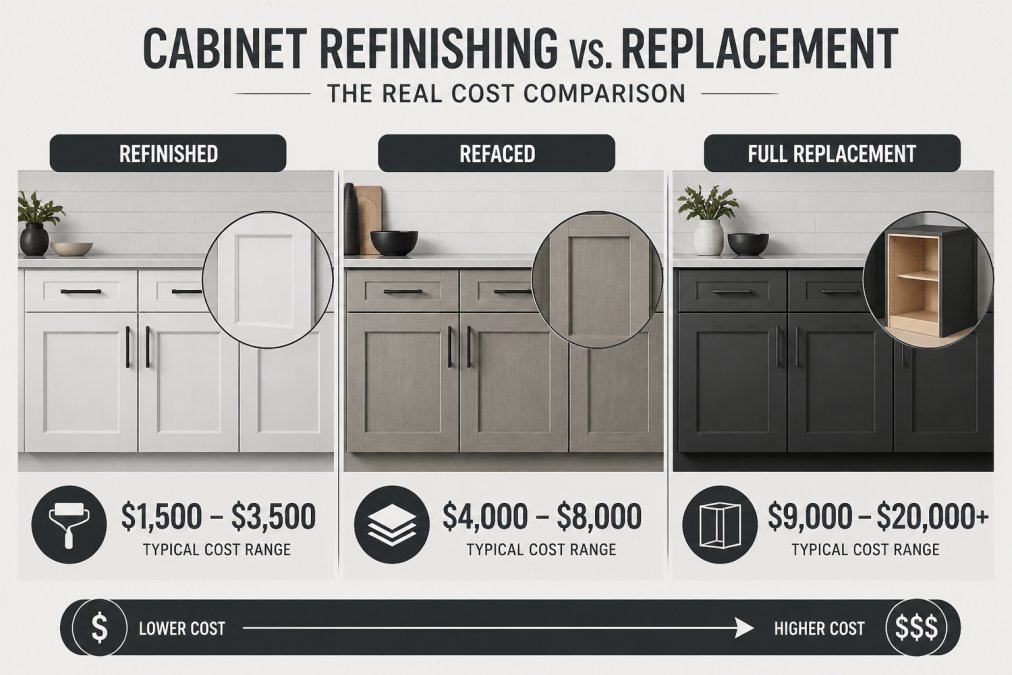
The cost difference is substantial, but broad claims like "refinishing costs a fraction of replacement" do not help you budget.
| Scope | Refinishing | Refacing | Replacement |
|---|---|---|---|
| Small kitchen (10x10, 20 linear ft) | $1,200-$3,500 | $4,000-$8,000 | $8,000-$18,000 |
| Medium kitchen (10x14, 30 linear ft) | $2,500-$6,000 | $7,000-$14,000 | $15,000-$30,000 |
| Large kitchen (12x20, 40 linear ft) | $4,000-$9,000 | $10,000-$20,000 | $22,000-$45,000 |
These ranges assume professional labor, standard paint or stain for refinishing, new doors and veneer for refacing, and semi-custom stock boxes for replacement.
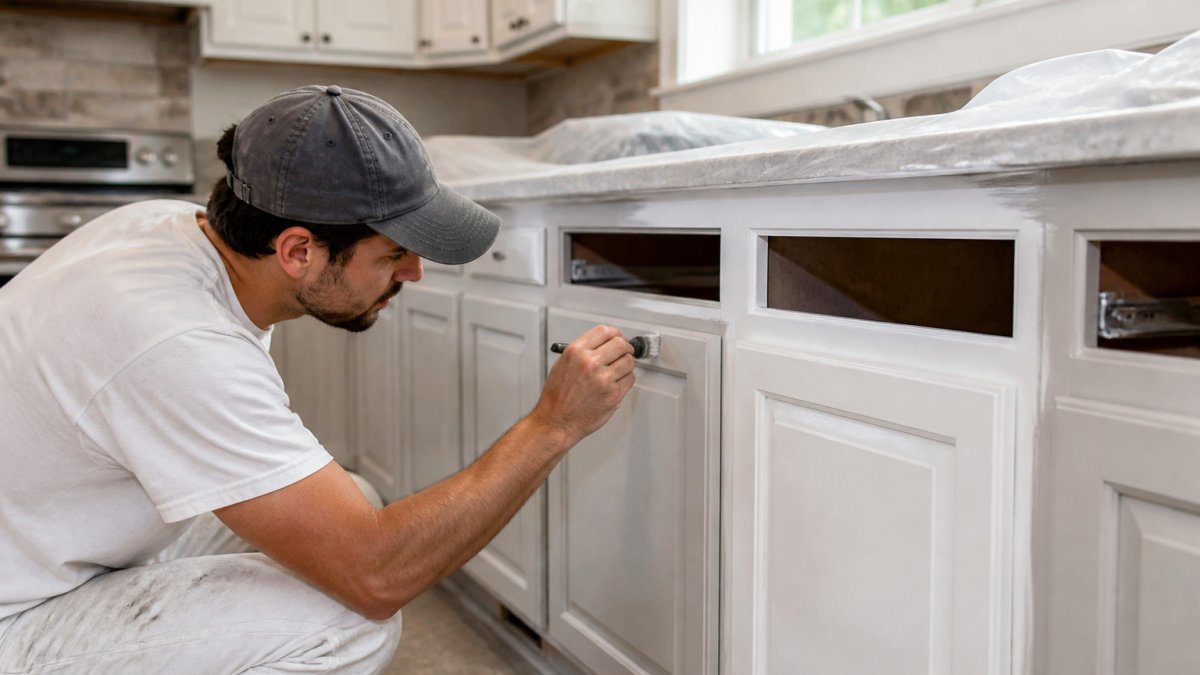
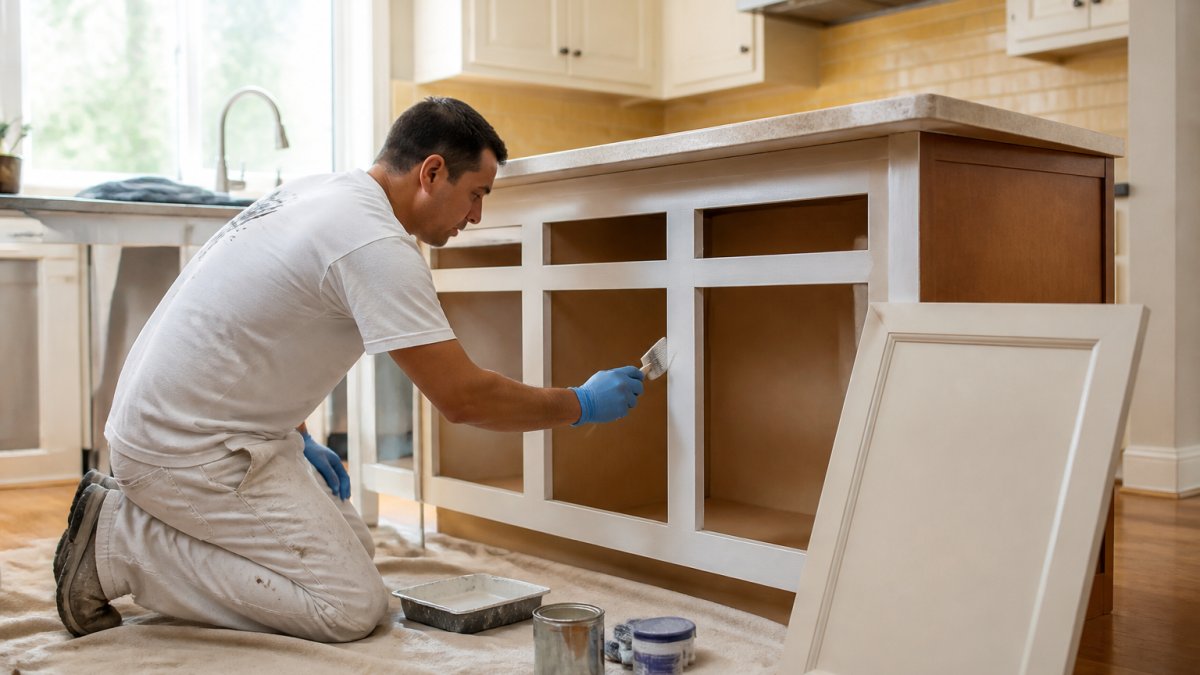
What is included matters as much as the number. A refinishing quote should cover removal of doors and drawers, cleaning and degreasing, sanding, filling and caulking, priming, two finish coats, and hardware reinstallation.
The real question is not just cost, it is value. A refinishing project that lasts eight years delivers better value than a replacement that takes three weeks of disruption. But refinishing cabinets with failing boxes wastes money.
At LMJ Bright Painting Services, we help homeowners evaluate this decision.
What Factors Affect Cabinet Refinishing Cost
Cabinet refinishing cost depends on several compounding variables. Kitchen size matters: a small galley costs less than a sprawling open layout. Cabinet condition affects preparation time significantly. Material choices (paint type, hardware upgrades) and labor intensity, including your contractor's experience, all influence the final number.
Cabinet condition and suitability
Not every cabinet is a good candidate. Solid wood frames, intact joinery, and surface-only damage are ideal. Water damage, particle board boxes, or structural failures make refinishing a poor investment. A professional inspection reveals what you're working with.
Previously painted cabinets present challenges: multiple paint layers can crack or peel if not properly removed. Stained wood with deep grain damage may not sand smoothly, and veneer over particle board can splinter. These issues don't disqualify refinishing, but they raise labor and material costs.
Surface preparation and materials
Preparation separates quality work from rushed work. Proper refinishing requires thorough sanding, filling gaps, priming bare wood, and applying finish coats evenly. Skipping these steps causes peeling paint within two to three years.
Material choices range widely. Basic interior latex costs less than premium cabinet-grade paint formulated for durability and moisture resistance. Stain requires different prep than paint. Hardware replacement adds cost but transforms appearance dramatically. These decisions compound the final bill.
Labor and project scope
Labor is the largest cost component. A kitchen with 20 linear feet of cabinets requires different effort than one with 40 feet. Complexity matters too: open shelving takes longer than enclosed cabinets. Removing and reinstalling hardware, masking, and protecting countertops and flooring all demand time.
Your contractor's experience affects timeline and quality. A methodical approach takes longer but delivers better results; rushing preparation creates problems months later. Understanding the scope, from inspection through final cleanup, prevents cost surprises.
Pros and Cons of Cabinet Refinishing
Advantages for homeowners
Cabinet refinishing delivers visual transformation at a fraction of replacement cost, without weeks of disruption. You keep your existing layout, appliances, and countertops intact. For homeowners happy with cabinet placement and function but tired of the look, refinishing solves the problem directly.
Timeline is another advantage. Refinishing projects typically finish faster than replacement, which often takes longer. If you need the kitchen functional quickly, refinishing minimizes disruption.
Refinishing also preserves character. Older homes with quality wood cabinets often benefit from restaining rather than replacement, keeping original craftsmanship visible.
Real limitations to consider
Refinishing can't fix structural problems. Water-damaged boxes, failing joints, or particle board deterioration won't improve with paint. You're refreshing surfaces, not rebuilding foundations. If your cabinets are genuinely worn out, refinishing only delays replacement.
Storage and layout stay the same. If your kitchen lacks cabinet space or the layout frustrates you, refinishing won't solve it. Refacing adds new doors and fronts but keeps the same footprint. Only replacement reconfigures the space.
Durability depends heavily on preparation and maintenance. Cabinets near dishwashers and sinks face harder conditions. Paint finishes require regular cleaning and occasional touch-ups; stains show dust and fingerprints more readily. Understanding these realities prevents disappointment.
How Long Does Cabinet Refinishing Last
Durability and finish performance
A properly executed refinishing job can last for many years. Lifespan depends on kitchen conditions, usage, and how well the initial work was done. Cabinets in dry kitchens with moderate use can look good for a long time; high moisture or heavy daily use shortens that window.
Paint finishes typically outlast stains in kitchens, providing a protective barrier against moisture and staining. Stains are more vulnerable to water rings and scratches but offer a warmer aesthetic. Both require quality preparation and proper materials to reach their potential lifespan.
The difference in longevity usually comes down to preparation. Inadequate sanding leaves old finish underneath, skipped priming means paint doesn't adhere, and using inappropriate paint sacrifices durability. These shortcuts create problems within a few years.
Maintenance and lifespan expectations
Regular maintenance extends refinishing lifespan significantly. Wipe spills promptly, especially near sinks and dishwashers. Clean surfaces monthly with appropriate cleaner, not harsh chemicals that strip finish. Avoid slamming doors or overloading shelves.
Touch-ups become necessary over time. Small chips or scratches can be addressed with matching paint or stain, and early attention prevents spreading. Minor touch-ups every few years maintain appearance without full refinishing.
Understanding that refinishing isn't permanent sets realistic expectations. It's a refresh, not a permanent solution, and cabinets will eventually need attention again, important context for the value calculation.
The Hidden Costs: What Most Homeowners Miss
Cabinet refinishing projects often uncover surprises. Once doors come off and cabinets are empty, issues become visible. Damaged interior surfaces, failed hinges, or structural problems hidden by clutter emerge.
Hardware replacement costs add up. If hinges are worn, handles are broken, or you want to update the look, new hardware isn't cheap. A full kitchen might need 20-30 new hinges and multiple handles.
Temporary kitchen disruption has real costs. If you rely on your kitchen for meal prep, the project creates inconvenience.
Paint or stain selection takes time. Samples on cabinets look different than small chips. Lighting affects perception. Choosing the wrong color means either living with it or paying to repaint. Getting this decision right upfront prevents expensive corrections.
Is Cabinet Refinishing Worth It? A Decision Framework
Most articles tell you to check cabinet condition, but few explain how. This framework walks through the specific materials and damage types that determine whether refinishing is viable, so you can assess your own cabinets before calling a professional.
Step 1: Identify your cabinet box material
Open a door and look at the interior and the frame. The material of the boxes, not the doors, determines whether refinishing is worth it.
- Solid wood boxes: Excellent candidates. Wood can be sanded, stained, or painted and holds up well. Look for solid wood frames and sides, often found in older or custom cabinets.
- Plywood boxes: Good candidates. Plywood is stable and takes paint or stain well, though veneer edges can chip if handled roughly.
- Particle board or MDF boxes: Mixed. These can be refinished if they are dry and intact, but they swell and crumble when wet. If you see swelling, soft spots, or crumbling at the bottom of the sink base, refinishing will not fix it.
- Veneer over particle board: Proceed with caution. Veneer can splinter during sanding, and moisture damage underneath is common. A professional can sometimes repair small areas, but widespread veneer failure means replacement.
Step 2: Check for water damage and structural problems
Water damage is the most common reason refinishing fails. Inspect these areas:
- Under the sink and dishwasher: look for dark stains, soft wood, peeling veneer, or a musty smell.
- Around the refrigerator ice maker line and any plumbing penetrations.
- Bottom edges of base cabinets and toe kicks, where spills pool.
- Inside cabinets against exterior walls, where condensation can form.
Structural problems include sagging shelves, doors that will not stay aligned, drawers that stick or fall out, and cracked or split frames. Refinishing refreshes surfaces; it does not rebuild joints or replace failed boxes. If you find structural issues, replacement is the better investment.
Step 3: Assess your existing finish
What is on your cabinets now affects preparation time and cost.
- Factory-finished or bare wood: Easiest to refinish. Sanding and priming are straightforward.
- Previously painted cabinets: Can be refinished, but multiple layers of old paint may need to be stripped or sanded back. Lead paint in homes built before 1978 requires special handling under EPA rules (the EPA).
- Stained wood with deep grain: Can be restained, but deep scratches or stains may not sand out completely. A darker stain can hide some imperfections.
- Laminate or thermofoil: These cannot be stained and are difficult to paint without special bonding primers. Many professionals recommend refacing instead.
Step 4: Match the option to your goals
| Your situation | Best option | Why |
|---|---|---|
| Boxes sound, want a new color or finish | Refinishing | Lowest cost, preserves layout and boxes |
| Boxes sound, want new door style | Refacing | New doors and veneer change the look without demolition |
| Water damage, structural issues, or layout change | Replacement | Refinishing cannot fix failed boxes or reconfigure space |
| Selling within 2 years | Refinishing or refacing | Lower upfront cost; full replacement rarely returns 100% at sale |
| Staying 5+ years and want a permanent upgrade | Replacement or high-quality refacing | Longer lifespan and better durability |
Step 5: Run the numbers
Use the cost ranges from the comparison section and add these factors:
- Hardware: New hinges and pulls for a 20-door kitchen can add $200-$600 in materials alone.
- Color testing: Professional color matching or sample doors may add $100-$300.
- Temporary kitchen setup: Eating out or setting up a temporary kitchen can cost $200-$800 over a two-week project.
- Future replacement: If refinishing lasts 8 years and replacement lasts 20, compare the annual cost. A $3,000 refinish over 8 years is about $375 per year; a $15,000 replacement over 20 years is $750 per year. Refinishing still wins on annual cost, but only if it lasts as expected.
For most homeowners with structurally sound cabinets who want a visual refresh without major disruption, cabinet refinishing is worth the cost. The value comes from avoiding replacement expense while achieving meaningful improvement. For cabinets with structural issues or homeowners needing complete reconfiguration, replacement is the better choice despite higher cost.
Frequently Asked Questions
Is cabinet refinishing worth the cost compared to replacement?
Cabinet refinishing can be a more cost-effective option than full replacement, making it worth considering if your cabinet boxes are structurally sound. The decision depends on your cabinets' condition, your timeline, and long-term plans. If doors are warped, boxes are damaged, or you need a complete layout change, replacement may be the better investment. For cosmetic updates and solid structures, refinishing delivers strong value and faster project completion.
How long does cabinet refinishing last?
Professional cabinet refinishing can last for many years with proper maintenance, though high-quality finishes in low-traffic areas may last longer. Durability depends on surface preparation, paint quality, and kitchen use. Daily wear, humidity, and cleaning habits affect longevity. Professional preparation, including sanding, priming, and multiple topcoats, significantly extends finish life compared to DIY approaches. Maintenance like gentle cleaning and avoiding harsh chemicals helps maximize the lifespan.
What are the main disadvantages of cabinet refinishing?
Cabinet refinishing cannot fix structural damage, warping, or layout issues. The process requires kitchen disruption while paint cures, and cabinets must be emptied during work. Refinished cabinets won't match new hardware or design trends as completely as replacement options. If your cabinets have deep water damage, pest damage, or severe wear, refinishing may not be suitable. It's also less effective for cabinets with complex or damaged veneers.
What makes professional cabinet refinishing different from DIY?
Professional refinishing includes thorough surface preparation, sanding, priming, and multiple finish coats applied with proper ventilation and curing time. Professionals identify and address underlying issues before painting, preventing peeling and failure. They use commercial-grade materials and equipment that deliver durability DIY approaches rarely achieve. Written scopes and transparent preparation protect homeowners from hidden costs and surprises. Professional work typically lasts longer than DIY attempts.