 blog
10 Signs Your Kitchen Cabinets Need Refinishing
Table of Contents
- Why Kitchen Cabinets Need Refinishing: The Reality of Wear and Tear
- 1. Peeling, Chipped, or Damaged Finishes
- 2. Visible Scratches, Scuff Marks, and Surface Wear
- 3. Fading, Discoloration, or Outdated Cabinet Appearance
- 4. Cabinet Doors That Sag or Do Not Close Properly
- 5. Sticky Drawers and Difficult-to-Operate Hardware
- 6. Structural Damage, Warping, and Cabinet Box Integrity
- Refinish or Replace: How to Decide
- Frequently Asked Questions
Last Updated: October 17, 2026
Why Kitchen Cabinets Need Refinishing: The Reality of Wear and Tear
Your kitchen cabinets take a beating. Every day brings moisture from cooking, heat from the stove, and hands opening and closing doors. Over time, this constant use shows. Paint peels. Finishes fade. Doors stop closing properly.
At LMJ Bright Painting Services, we help homeowners recognize when kitchen cabinets need refinishing versus other solutions. The difference matters because refinishing costs less than replacement but requires proper preparation to last. A poorly executed refinish job peels within months.
This guide covers the 10 most common signs that refinishing is your best move. We'll also help you understand when to refinish versus when other approaches make more sense. By the end, you'll know exactly what to look for in your own kitchen.
1. Peeling, Chipped, or Damaged Finishes
The finish is the protective layer on your cabinet surfaces. This is one of the clearest signs your kitchen cabinets need refinishing.
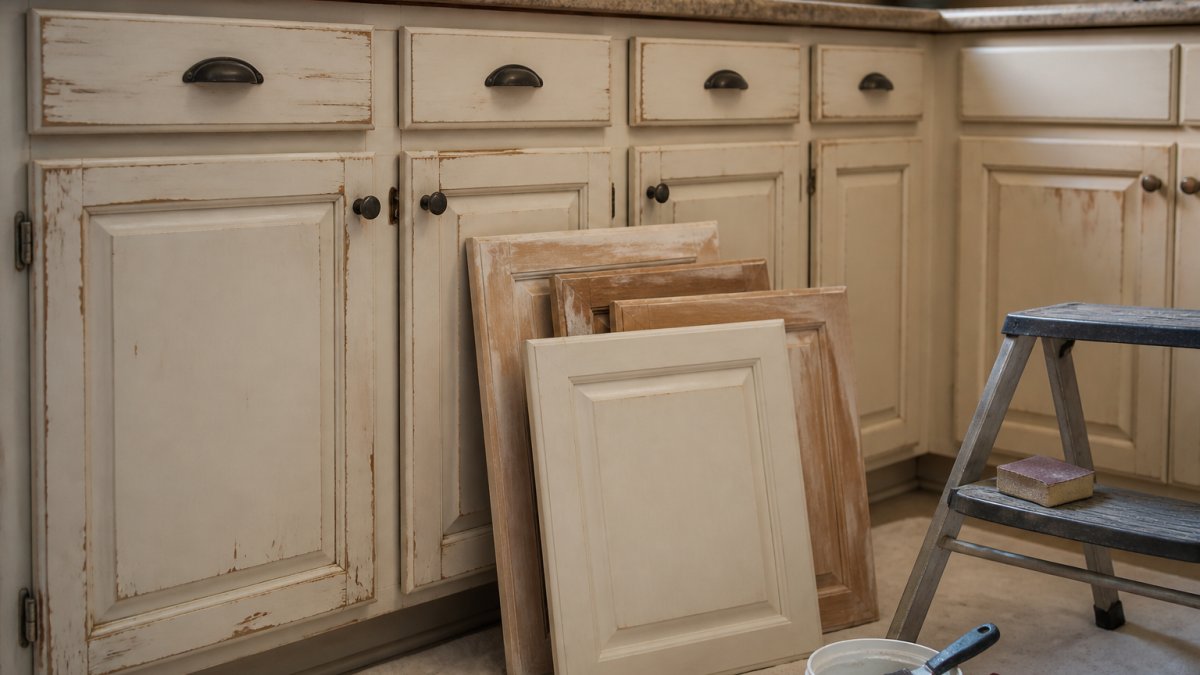
Peeling typically starts at edges or corners where moisture collects. You might notice paint curling away from the wood like paper peeling off a wall.
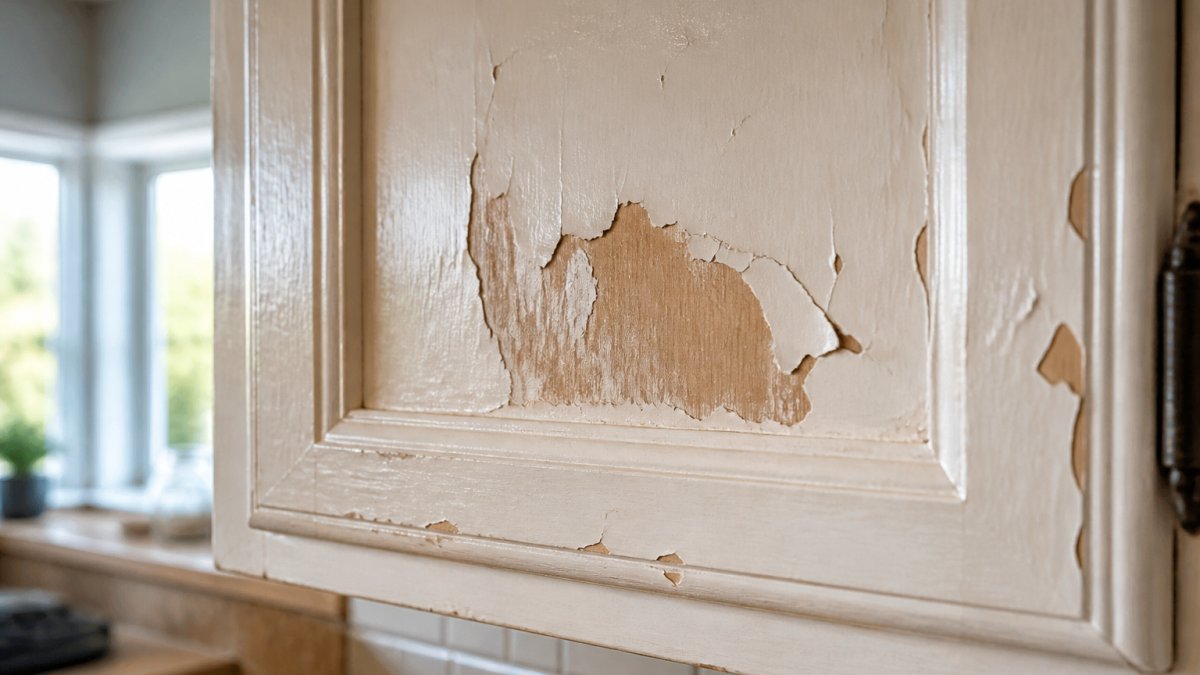
The real danger is what happens next. Exposed wood absorbs moisture. Moisture causes swelling and warping. Warped cabinets don't close properly and invite more damage. A fresh finish seals the wood and stops this cycle.
What to do: If peeling or chipping covers less than 10% of your cabinet surfaces, refinishing is ideal.
2. Visible Scratches, Scuff Marks, and Surface Wear
Scratches and scuff marks are the most visible signs of aging cabinets. They accumulate from daily use: utensils scraping surfaces, pots and pans sliding across doors, hands brushing against edges constantly.
Small scratches are cosmetic. But they also damage the protective finish, exposing wood to moisture and dirt. Scuff marks show where the finish has worn thin.
A single scratch is no reason to refinish. But when scuff marks form a pattern across multiple cabinet doors, or when scratches are deep enough to catch your fingernail, your finish is compromised.
What to do: Surface scratches and light scuffs respond well to refinishing. The sanding process removes damaged finish, and a new coat hides imperfections while restoring protection. This is especially effective if the underlying wood is still solid.
3. Fading, Discoloration, or Outdated Cabinet Appearance
Color fades over time. Sunlight bleaches cabinet finishes, especially on doors facing windows. You might notice one side of your kitchen looks noticeably lighter than the other.
Discoloration also comes from heat and moisture exposure. Cabinets near the stove develop yellow or brown stains. Water splashes near the sink leave marks. These stains resist cleaning and become permanent parts of the finish.
Outdated appearance is different from damage, but it's equally valid. Cabinet styles change. What looked modern 15 years ago now looks dated.
What to do: If cabinets are structurally sound but look tired, refinishing is the most cost-effective solution. Choose a finish color that complements current design trends while matching your kitchen's style. The transformation is dramatic.
4. Cabinet Doors That Sag or Do Not Close Properly
Doors that sag or won't close indicate structural stress. Cabinet doors hang on hinges that support significant weight. Over years, hinges wear out. Wood swells from moisture exposure. Hinges loosen from repeated opening and closing.
When a door sags, the top edge pulls away from the frame. The door drags on the bottom or catches on the cabinet box.
Some sagging is fixable with hinge adjustment. Tighten the screws or adjust the hinge position slightly. But if adjustment doesn't work, the hinge itself is failing or the wood around the hinge has swollen permanently.
What to do: Before refinishing, address hinge problems. Loose hinges can be tightened. Damaged hinges should be replaced. Once hardware is functioning, refinishing protects the wood and prevents future moisture damage that causes sagging.
5. Sticky Drawers and Difficult-to-Operate Hardware
Drawers that stick or require force to open and close signal finish problems and swelling. When finish wears away, wood absorbs moisture and swells. Swollen wood rubs against drawer slides, creating friction and resistance.
Hardware that's difficult to turn or pull often has finish buildup or corrosion. Handles and knobs accumulate dust, grease, and old finish layers. Over time, they become stiff and unreliable.
Sticky drawers are more than inconvenient. They indicate your finish is failing and wood is absorbing moisture. This accelerates damage to the cabinet box and drawer components.
What to do: Refinishing includes sanding drawer fronts and cabinet boxes to remove swelling. New finish seals the wood and prevents future moisture absorption. Hardware is cleaned or replaced as part of the process.
6. Structural Damage, Warping, and Cabinet Box Integrity
The cabinet box is the foundation. If the box is warped, cracked, or water-damaged, refinishing alone won't save it. Warping occurs when wood absorbs moisture unevenly.
Cracks in cabinet boxes indicate serious structural stress. Water damage shows as dark staining, soft spots, or areas where wood crumbles when pressed. These problems require repair or replacement, not just refinishing.
To check your cabinet box, open cabinet doors and look inside. Run your hand along the interior walls. Feel for soft spots, swelling, or areas where the surface is rough or damaged.
What to do: If the cabinet box is solid and structurally sound, refinishing protects it and extends its life.
Refinish or Replace: How to Decide
Most articles tell you to "weigh condition against budget" and stop there. That advice is useless when you're standing in your kitchen with a peeling door in one hand and a contractor's quote in the other. Use this decision framework instead: it walks through cabinet condition, material compatibility, and desired outcome in the order that actually determines the answer.
Step 1: Score the cabinet box first
Refinishing only makes sense if the boxes are sound. Open every door and drawer and inspect the interior. You are looking for four disqualifiers:
- Soft spots where a screwdriver handle presses into the wood
- Dark water staining at the bottom panel or around the sink base
- Delamination where the interior lining separates from the box
- Warping you can feel by running a straightedge along the cabinet face
If you find any of these, refinishing is off the table for that cabinet. Repair or replacement is the correct path, and no amount of sanding and coating will fix a rotting box.
Step 2: Match the material to the finish method
Not every cabinet surface accepts a refinish the same way. Material compatibility is the factor most homeowners overlook, and it is the single biggest cause of a refinish that peels within a year.
| Cabinet material | Refinish feasibility | What to know |
|---|---|---|
| Solid wood | Excellent | Sands cleanly; accepts stain, paint, or clear coat |
| Wood veneer | Good with care | Sanding through the veneer ruins the door; light scuff-sand only |
| Laminate or thermofoil | Limited | Requires bonding primer and a compatible topcoat; peeling edges must be repaired first |
| Previously painted | Good if sound | Test for adhesion; lead-safe practices apply to pre-1978 coatings |
| Metal | Possible | Requires etching primer; rarely cost-effective versus replacement |
If your doors are laminate or thermofoil and the edges are already lifting, refinishing is a short-term patch at best. Refacing, which replaces the door and drawer fronts while keeping the boxes, is often the better middle path.
Step 3: Separate cosmetic wear from functional failure
Cosmetic wear, peeling finish, scratches, fading, discoloration, is refinishing territory. Functional failure, sagging doors that won't adjust, drawers that bind after hardware replacement, cracked stiles, points to repair or replacement. The dividing line is simple: if the problem is on the surface, refinish. If the problem is in the structure, repair or replace.
Step 4: Compare realistic cost and timeline
Refinishing is the lowest-cost option that keeps your existing boxes, but it is not free, and the range is wide. As a planning guide, professional cabinet refinishing is the lowest-cost option that keeps your existing boxes, versus refacing and full replacement at higher costs. Get at least two written estimates, and make sure each one states whether doors are removed and sprayed off-site, how many coats are applied, and what prep is included.
Timeline matters too. A typical refinish takes time from prep through cure, with the kitchen usable for most of that window. Refacing usually runs two to three weeks. Full replacement commonly stretches four to eight weeks once you account for ordering, demolition, and installation.
Step 5: Check expected lifespan against your plans
A properly prepped and sprayed refinish commonly lasts for years in a normal residential kitchen. Refacing typically delivers a similar lifespan because the boxes are unchanged. New cabinets can last decades, but you pay for that longevity up front. If you plan to sell within a few years, refinishing delivers the visual refresh at the lowest cost; if you plan to stay for 20 years and want a layout change, replacement is the better long-term spend.
The inspection checklist
| Cabinet component | What to check | Refinish viable? |
|---|---|---|
| Cabinet box | Solid wood, no soft spots, no water stains, no delamination | Yes, if solid |
| Doors and drawers | Operate smoothly or can be adjusted; no cracked stiles | Yes, if functional |
| Finish | Peeling, chipped, faded, or scratched but adhered | Yes |
| Material | Solid wood, sound veneer, or properly primed laminate | Yes, with the right prep |
| Hinges and hardware | Can be tightened or replaced | Yes |
| Wood structure | No warping, cracking, or rot | Yes |
| Interior | Clean, dry, no odors or stains | Yes |
When you're ready to move forward, LMJ Bright Painting Services provides a free smart interior painting cost estimator and in-person verification before final pricing. We create a written scope that defines exactly what work is included, so there are no surprises. Our veteran-owned team prioritizes clear planning and transparent communication from estimate to final coat.
The key to successful cabinet refinishing is proper preparation. Old finish must be completely removed where it is failing. Wood must be sanded smooth. Surfaces must be cleaned and primed before new finish is applied. Rushed preparation leads to peeling and failure within months. Professional refinishing includes all these steps, ensuring your cabinets look fresh and stay protected for years.
Frequently Asked Questions
How can you tell if kitchen cabinets need refinishing?
Look for peeling or chipped paint, visible scratches and scuff marks, fading or discoloration, doors that sag or won't close properly, sticky drawers, and structural damage like warping. If the cabinet boxes remain solid and sturdy but the finish looks worn or the doors and hardware aren't functioning smoothly, refinishing is usually the right choice. A professional inspection can confirm whether refinishing will restore your cabinets or if replacement is necessary.
Should you refinish or replace kitchen cabinets?
Refinish if the cabinet boxes are structurally sound, doors align properly, and only the finish or hardware needs updating. Replace if the boxes are warped, doors are severely damaged, or the layout no longer fits your needs. Refinishing costs less and takes weeks; replacement is more expensive but offers complete design flexibility. A written scope from a professional contractor will clarify which option makes sense for your situation.
How long does cabinet refinishing take?
Cabinet refinishing takes time, depending on the number of cabinets, finish condition, and preparation required. The timeline includes surface prep, primer application, paint or stain coats, and curing time between applications. High-use kitchens with extensive wear may take longer. Your contractor should provide a detailed schedule upfront so you can plan around kitchen access and any disruption to your home or business.
Can you refinish cabinets with peeling or chipped paint?
Yes, peeling or chipped paint is one of the most common reasons to refinish. The damaged finish must be sanded down to bare wood or a solid base, then primed and repainted. Proper surface preparation is critical, rushing this step is why paint peels again after a few years. Professional refinishing includes thorough sanding, primer, and high-quality paint or stain applied in controlled conditions to prevent future peeling.