 Comparison
Hiring Professional Painters vs DIY: Which Fits Your Project
Last Updated: October 28, 2026
Quick Summary
The benefits of hiring professional painters vs DIY come down to one trade: you pay more upfront to buy back time, preparation quality, and a finish that holds up. Professional painters handle surface preparation, application, and cleanup for a fee, while DIY painting means prepping, priming, and applying paint yourself to save on labor costs.
- Labor is usually the largest cost driver and the majority of a residential interior quote.
- Contractor pricing through supplier accounts is often below retail paint prices.
- Prep is the part DIYers most often rush, and it determines whether paint holds.
- Homes built before 1978 carry lead dust risk when painted surfaces are disturbed.
- A bedroom or powder room with sound walls and standard ceiling height is the classic DIY project.
Table of Contents
- Hiring Professional Painters vs DIY: The Core Trade-Off
- Cost to Hire a Painter vs DIY: A Line-by-Line Breakdown
- How Long Does It Take to Paint a Room, DIY vs Professional
- Surface Preparation and Finish Quality: Where Professional Painters Pull Ahead
- When to Hire a Professional Painter (and When DIY Makes Sense)
- DIY Interior Painting Tips If You Go the Solo Route
- Build Your Free Estimate with LMJ Bright Painting Services
- Frequently Asked Questions
Hiring Professional Painters vs DIY: The Core Trade-Off
The benefits of hiring professional painters vs DIY come down to one trade: you pay more upfront to buy back time, preparation quality, and a finish that holds up.
DIY painting is the practice of prepping, priming, and applying paint yourself to save on labor costs. Professional painters are contractors who handle surface preparation, application, and cleanup for a fee.
Below, we'll break down costs, timelines, surface prep, and a decision framework so you can pick the right path for your project.
Cost to Hire a Painter vs DIY: A Line-by-Line Breakdown
The upfront cost gap is real, and it's the reason most homeowners start leaning DIY. Hiring a painter means paying for labor on top of materials. Painting yourself means paying for materials and your own time. The useful comparison is not the price of a gallon of paint versus a quote, it is the full line-item budget on both sides.
Here is how the line items typically stack up, with the mechanism behind each one:
| Line Item | DIY | Professional |
|---|---|---|
| Labor | Your time, valued at whatever your weekend is worth | Largest cost driver; usually the majority of a residential interior quote |
| Paint and primer | Retail shelf price per gallon | Contractor pricing through supplier accounts, often below retail |
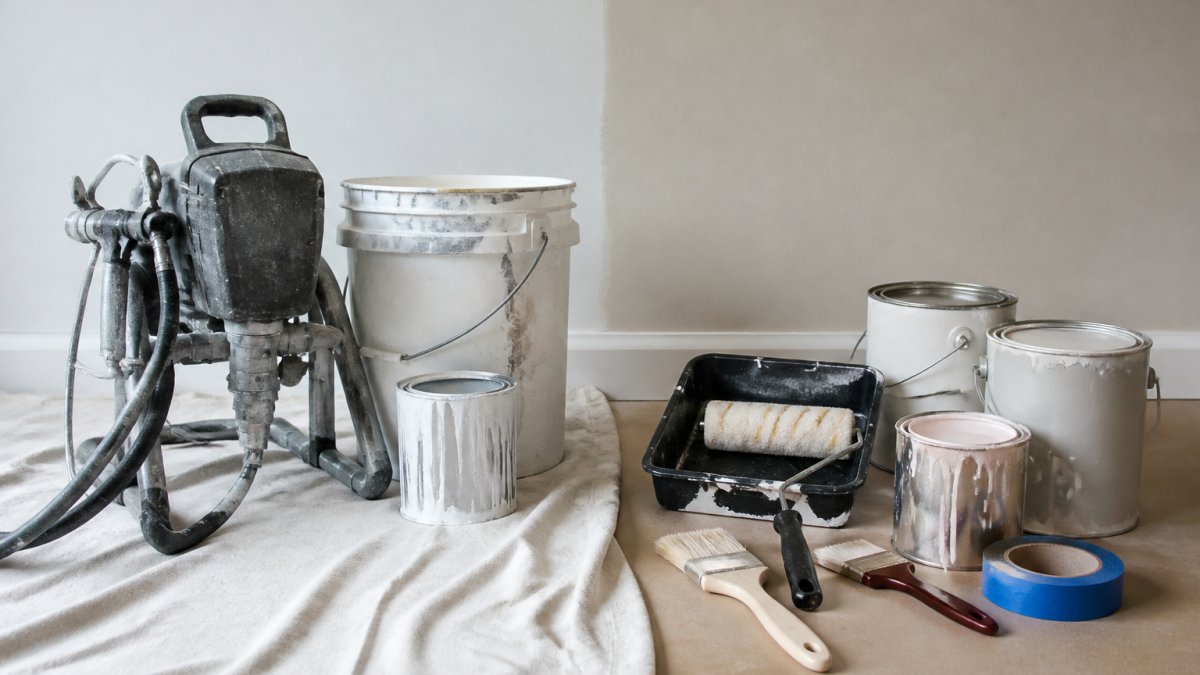
| Tools and supplies | Brushes, rollers, trays, tape, drop cloths, sanding blocks, bought or rented | Included in the scope; crews arrive with ladders, sprayers, and containment |
| Surface prep | Your time for cleaning, patching, sanding, caulking, priming | Included in the scope; prep hours are built into the quote |
| Repairs | You absorb the cost of fixing drips, lap marks, or peeled patches | Rework is typically covered by the contractor before final walkthrough |
| Cleanup and disposal | Your time; leftover paint and solvent disposal is on you | Included; crews haul away waste and leave the room usable |
| Repaint risk | Higher if prep is rushed; a failed coat means buying materials twice | Lower with proper prep; a warranty usually backs the work |
A common mistake is comparing only the paint can price to a full quote. Our line-by-line cost comparison of professional painting vs DIY walks through each of those items in more detail.
How Long Does It Take to Paint a Room, DIY vs Professional
The gap widens with scope. High ceilings, stairwells, and hard-to-reach areas slow DIY work considerably.
Surface Preparation and Finish Quality: Where Professional Painters Pull Ahead
Surface preparation is where the two paths diverge most.
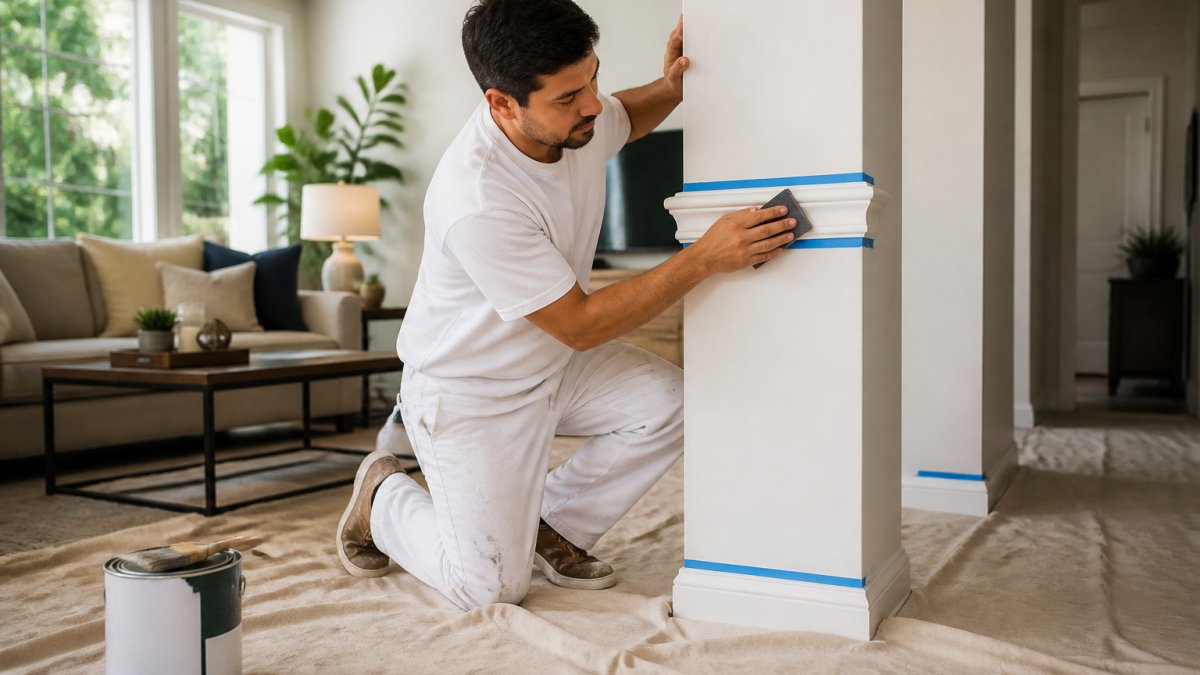
Paint applied over a dirty or unpatched surface can peel, blister, or show every imperfection. Attention to detail during prep is the unglamorous work that protects your investment.
If you're weighing the full case, our overview of the benefits of professional interior painting services covers prep, protection, and finish quality.
When to Hire a Professional Painter (and When DIY Makes Sense)
Most homeowners do not need a philosophy of painting, they need a decision they can defend. Use the criteria below as a checklist.
Hire when:
- The surface is in poor condition. Peeling, blistering, chalking, or widespread patching means hours of prep before the first coat. Prep is the part DIYers most often rush, and it is the part that determines whether the paint holds.
- The work is above comfortable reach. High ceilings, two-story foyers, and stairwells put you on a ladder or a roof edge.
- The home was built before 1978. Disturbing painted surfaces in older homes can release lead dust. DIY lead disturbance is a health risk you cannot easily undo.
- The deadline is fixed. A rental turnover, a home sale, or a move-in date leaves no room for a learning curve.
- **
- **
DIY when:
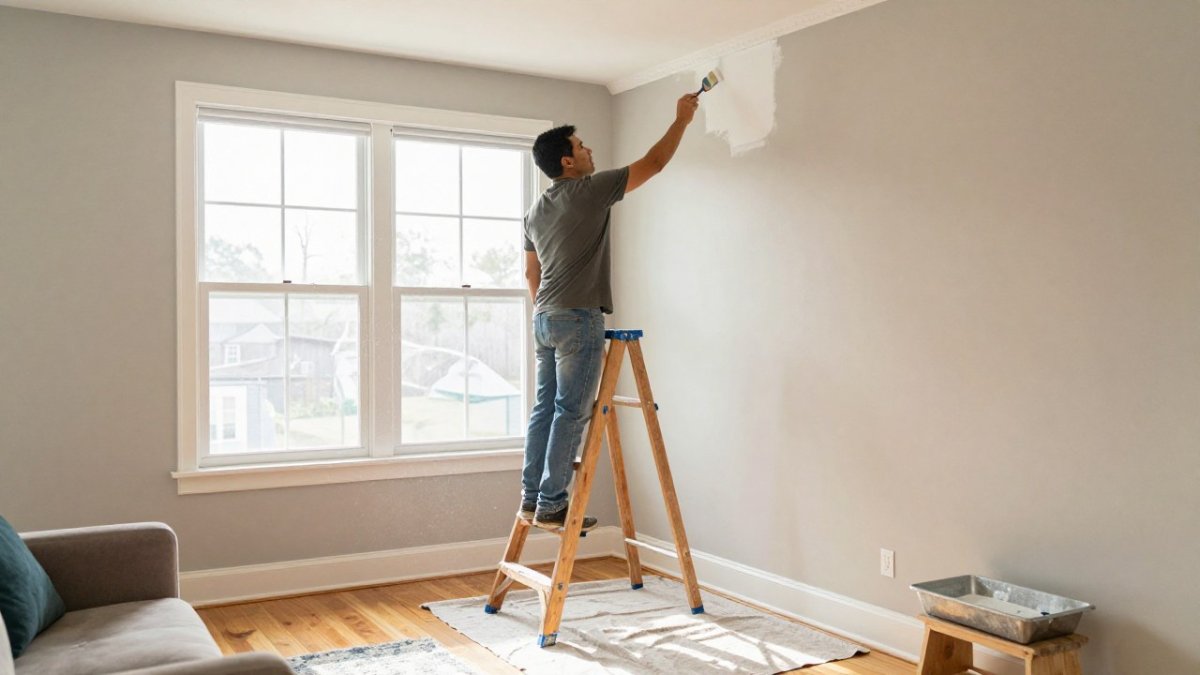
- It is one small room in good condition. A bedroom or powder room with sound walls and standard ceiling height is the classic DIY project.
- You have more time than money. If the work can spread across weekends without disrupting the household, the labor savings are real.
- You are testing a color. Painting a single accent wall or a sample board before committing to a whole-house palette is a low-risk use of DIY time.
- You want to learn the skill. Many homeowners start with a closet or garage and build up to larger rooms.
Questions to ask before you sign a painting contract. The decision framework does not end at "hire." It continues into quote evaluation:
- Is the estimate written, and does it list the scope? Verbal quotes invite disputes.
- What preparation standard is promised? Ask specifically about cleaning, sanding, patching, caulking, and priming. A quote that skips prep is not cheaper, it is incomplete.
- **
- **
- **
- Who is on site, and who is the point of contact? Know whether the crew is employees or subcontractors and who answers the phone if something goes wrong.
If you're leaning toward hiring, you can see the full scope of interior painting services we provide.
DIY Interior Painting Tips If You Go the Solo Route
Going solo can work well if you plan the project carefully. Before you pick up a brush, follow this step-by-step guide to preparing walls for interior painting.
Build Your Free Estimate with LMJ Bright Painting Services
If you'd rather hand off the prep and finish work, start with a clear number. LMJ Bright Painting Services is a veteran-owned company built around defined scopes and transparent cost estimation, so you know what's included before work begins.
We plan room by room or by work zone, verify details in person before final pricing, and give you a written scope before scheduling or payment. You also get direct phone and message access to the business owner.
You can build a free estimate with our smart interior painting cost estimator to get a preliminary planning range from your room or wall measurements.
Frequently Asked Questions
Is it worth hiring a professional painter?
It depends on the project. For a single small bedroom in decent condition, DIY can be a reasonable budget choice.
Is it cheaper to paint a house yourself or hire a professional?
DIY is cheaper on paper because you avoid labor costs, but the gap narrows once you factor in paint, supplies, tools, and your own time.
How long does it take to paint a room yourself versus hiring a professional?
A typical bedroom takes a professional crew a day or less, including prep, two coats, and cleanup. A first-time DIYer should plan two to four days for the same room once you account for moving furniture, taping, patching, drying time between coats, and fixing mistakes. Larger rooms, high ceilings, and cabinet projects stretch both timelines, but the professional schedule stays more predictable.
When should you hire a professional painter instead of doing it yourself?
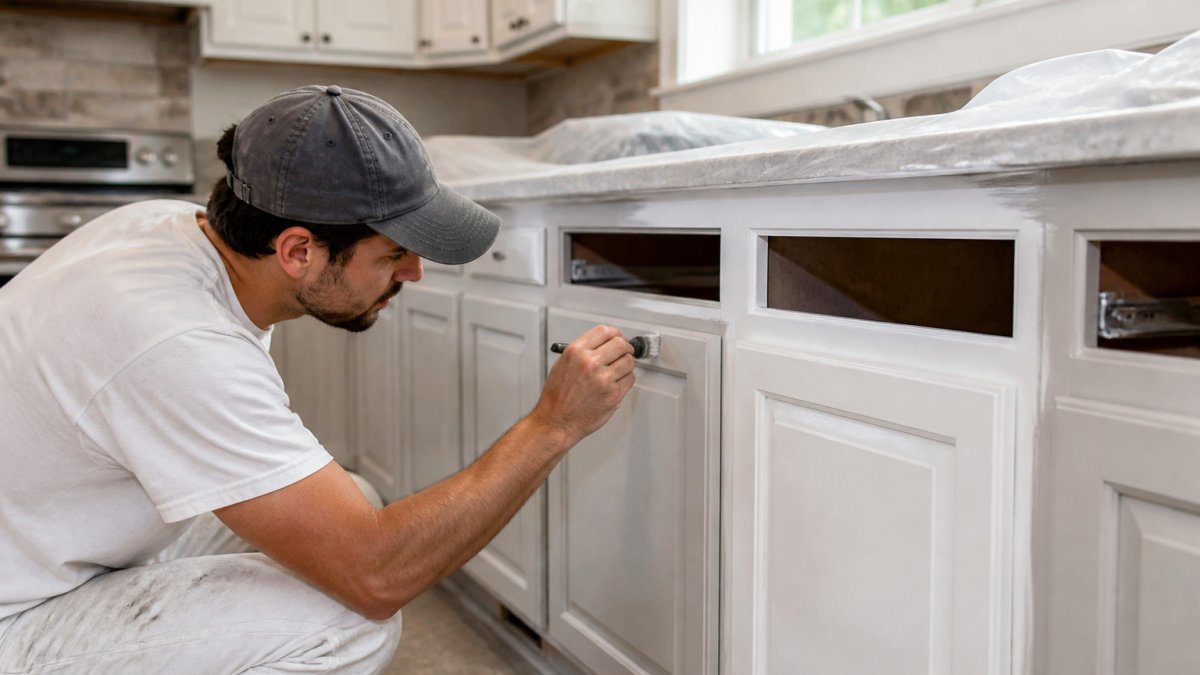
Hire a professional painter when the project involves cabinet painting or a tight deadline such as a rental turnover or commercial opening. DIY makes sense for a single low-traffic room in good condition, simple color refreshes, and projects where you can accept a learning curve.
Can a beginner get professional-looking paint results?
A beginner can get close on simple walls with careful prep, quality paint, and proper tools, but consistent results across trim, ceilings, and cabinets are harder. Pros rely on sanding, patching, priming, and controlled application to avoid lap marks and uneven coverage. If you go DIY, follow the manufacturer's dry time and coat recommendations, and budget extra time for prep rather than rushing the finish.
The hardest part of any painting project isn't picking a color. It's deciding who does the work and trusting the scope. If you want a defined plan, careful prep, and a written scope before anyone picks up a brush, get started with LMJ Bright Painting Services and build your free estimate today.