 How-to
Interior Painting Services Tampa Bay: 2026 Cost & Process Guide
Table of Contents
- Interior Painting Services Tampa Bay: What a Planned Project Looks Like
- Interior Painting Preparation: The Step Most Contractors Skip
- What Should Be in Your Interior Painting Estimate
- Interior Painting Cost: What Drives the Number Up or Down
- How Long Does Interior Painting Take, Room by Room
- Color, Sheen, and Room-Specific Recommendations for Tampa Bay Homes
- How to Vet a Licensed and Insured Painting Contractor
- Commercial Interior Painting and Rental Turnovers
- Frequently Asked Questions
Last Updated: October 20, 2026
Interior Painting Services Tampa Bay: What a Planned Project Looks Like
Interior painting services Tampa Bay homeowners book with confidence start with a written plan, not a ballpark number shouted from a doorway. At LMJ Bright Painting Services, we build every project from a room-by-room scope: what gets painted, what gets repaired, what gets protected, and what it costs before a single drop cloth lands. That order matters. A verbal estimate invites surprise charges later; a documented scope removes the argument before it starts.
Why Room-by-Room Planning Beats a Ballpark Quote
A ballpark quote is a guess dressed up as a price. Room-by-room planning replaces it with measured wall area, trim linear footage, ceiling height, and condition notes for each space. That detail protects you in two ways: it fixes the price against a defined scope, and it surfaces problems like failing caulk or water staining before work begins rather than mid-project.
Interior Painting Preparation: The Step Most Contractors Skip
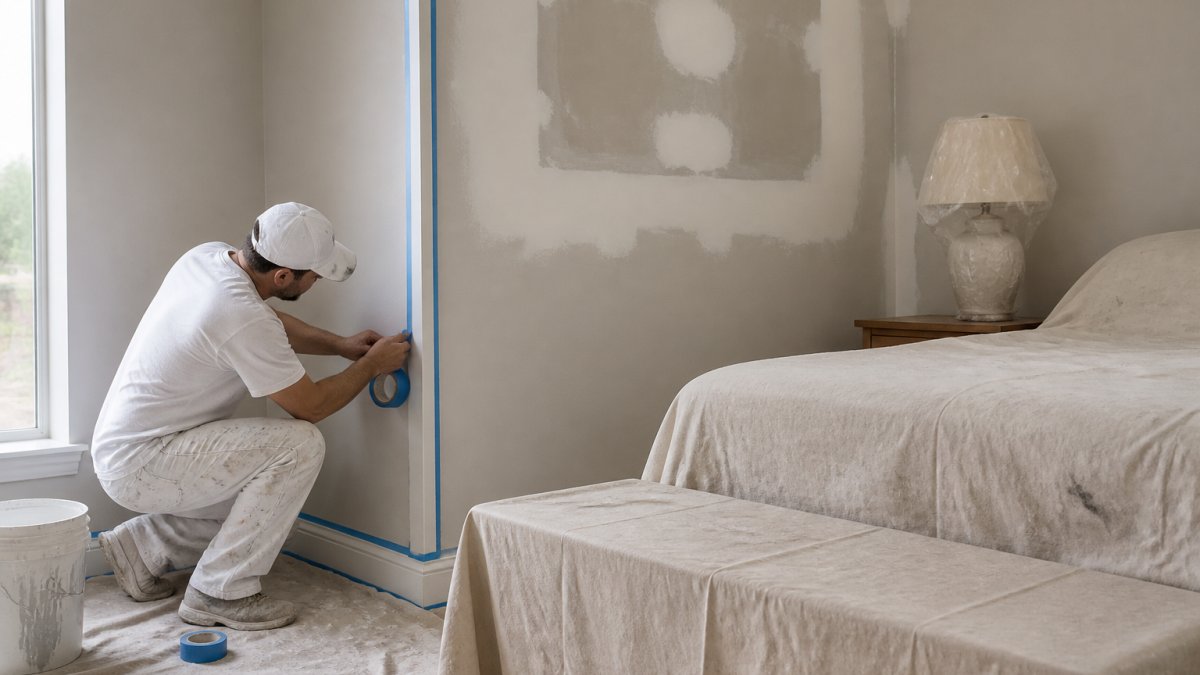
Preparation is where a paint job lives or dies, and it's the first place a rushed crew cuts corners. Proper preparation means moving and covering furniture, masking trim and floors, patching nail holes and cracks, sanding patched areas smooth, caulking gaps, and spotting stains with primer before any finish coat goes on. Skip the sanding and the patch telegraphs through the paint.
Surface Repairs, Sanding, and Primer Before the First Coat
Surface repairs fall into three buckets: cosmetic patching, joint and trim caulking, and stain or moisture blocking. Each needs its own product. Sanding between patch coats creates a flat surface the finish can sit on without texture showing through. Primer does two jobs at once, sealing porous drywall and locking down stains so they can't bleed through a light color.
What Should Be in Your Interior Painting Estimate
A complete interior painting estimate names the rooms, the surfaces in each room, the paint brand and product line, the number of coats, the prep work included, and the payment schedule. It should also state who moves furniture, who handles minor drywall repair, and what happens if undiscovered damage turns up. Vague line items like "paint interior" tell you nothing.
| Estimate Element | What to Look For | Red Flag |
|---|---|---|
| Room list | Each room named separately | "Whole house" with no breakdown |
| Surfaces | Walls, ceilings, trim, doors listed | "Walls only" buried in fine print |
| Paint spec | Brand, line, sheen named | "Quality paint" with no product |
| Prep scope | Patching, sanding, caulking itemized | Prep not mentioned |
| Coats | Number of finish coats stated | "Until covered" |
| Payment | Deposit and milestone schedule | Large cash deposit upfront |
Interior Painting Cost: What Drives the Number Up or Down
Interior painting cost is not a single number, it is the sum of five measurable inputs, and a credible estimate shows you how each one moves the total. Most contractors price interior work one of two ways: a square-foot rate applied to wall and ceiling area, or a flat per-room price that bundles walls, ceiling, and trim. Neither method is wrong, but you should know which one you are being quoted so you can compare bids apples to apples.
The Five Inputs That Move the Price
- Measurable wall and ceiling area. Paintable square footage, not floor square footage, is the base unit. A 12-by-12 bedroom has roughly 384 square feet of wall area at an 8-foot ceiling before subtracting doors and windows; a vaulted great room can double that per floor square foot. Ask for the paintable area in the estimate.
- Ceiling height and access. Standard 8-foot ceilings are priced as routine. Two-story foyers, stairwells, and vaulted spaces require ladders, scaffolding, or lifts, and that labor and setup time is a real line item. A staircase wall with a 20-foot peak is not the same job as a flat bedroom wall.
- Surface condition and repair volume. Clean, sound drywall prices at the base rate. Cracked plaster, water-stained ceilings, popped nails, failed caulk at tubs and windows, and wallpaper removal each add prep labor and materials. Repairs are usually quoted per patch, per linear foot of caulk, or as a lump-sum allowance, ask which.
- Trim and detail volume. Baseboards, crown molding, chair rail, window casings, doors, and closet interiors are priced by linear foot or per unit because they are slow, brush-and-roll work. A dining room with crown and chair rail can carry more trim labor than three plain bedrooms.
- Paint product and number of colors. A premium 100% acrylic interior line costs more per gallon than a builder-grade flat, and it usually covers better and touches up cleaner. Each additional color adds setup, cleaning, and sometimes a separate sheen, which is why a two-color room prices above a one-color room of the same size.
How the Quote Is Built
A transparent estimate typically shows labor and materials separately, or at minimum breaks the job into rooms with a stated scope per room. Deposit norms vary, but a common pattern is a modest deposit to schedule with the balance tied to milestones, not a large cash payment before work begins. Be cautious of any bid that is dramatically below the others with no written scope; the difference is usually prep work that was quietly excluded.
A Sanity-Check Checklist for Any Number
- Does the estimate state paintable square footage or a per-room breakdown?
- Are repairs and caulking itemized, or lumped into a vague allowance?
- Is the paint brand, product line, and sheen named?
We verify details in person before final pricing because a phone number cannot see a cracked corner or a stained ceiling. Pricing depends on scope, and scope is exactly what a written estimate should pin down.
How Long Does Interior Painting Take, Room by Room
How long interior painting takes depends on three clocks running at once: prep time, dry and recoat time, and cure time. Most schedules quote only the first two, which is why homeowners are surprised when a room still smells like paint or a door sticks a week later. Here is how the timeline actually breaks down, and how to plan your household around it.
The Three Clocks
- Prep and paint time. The working hours a crew is in the room.
- Recoat time. The interval between coats, set by the product label, typically a few hours for standard interior latex under normal temperature and humidity.
- Cure time. The longer window before the film reaches full hardness and washability, often measured in days to a couple of weeks depending on product and conditions.
Room-by-Room Working Estimates
These are working ranges for a standard room with routine prep, two finish coats, and cleanup, not guarantees:
- Bedroom (roughly 12-by-12, 8-foot ceiling): one to two working days including prep, two coats, and cleanup.
- Dining room with crown molding and chair rail: two to three working days because trim is slow brush-and-roll work.
- Bathroom: wall area is small, but humidity slows recoat and cure, so plan an extra day of drying margin even though the painting itself is fast.
Preparing Your Household
- Furniture and access. Confirm in writing who moves furniture and what gets covered. Most crews move small items and cover large pieces; pianos, electronics, and wall-mounted TVs are usually the homeowner's responsibility.
- Odor and ventilation. Standard interior latex is low-odor but not odorless. Run ventilation, keep pets and sensitive occupants out of freshly painted rooms, and expect the strongest smell on painting day, tapering over the next day or two.
- When rooms can be used again. Light foot traffic is usually fine once the finish coat is dry to the touch, but wait for the stated cure window before hanging pictures, replacing outlet covers that were removed, or washing walls.
What to Ask for in the Schedule
Ask for a day-by-day sequence in the estimate: which rooms on which days, when prep happens, and when each room is returned to you. A contractor who cannot name the sequence has not planned the job.
Color, Sheen, and Room-Specific Recommendations for Tampa Bay Homes
Sheen choice matters more in this climate than most guides admit. Flat hides wall imperfections and suits bedrooms and dining rooms where glare is unwelcome. Eggshell handles the wipe-downs a bathroom or hallway needs without the shine of semi-gloss. Semi-gloss belongs on trim, doors, and cabinetry, where durability and cleanability beat a matte look. For color, sample patches on the actual wall beat swatches every time; Florida light is bright and shifts a color more than a paint chip suggests.
How to Vet a Licensed and Insured Painting Contractor
Vetting a contractor comes down to four checks: license, insurance, written scope, and who actually shows up. Ask for proof of general liability and workers' compensation coverage, and confirm the certificate names the company you're hiring. Request the written scope before scheduling or paying anything. Ask directly whether the owner or the crew on your job is a subcontractor you've never met.
- License number verified with the state
- General liability certificate received
- Workers' compensation certificate received
Commercial Interior Painting and Rental Turnovers
Commercial interior painting and rental turnovers run on schedule discipline, not aesthetics. Property managers in Hillsborough and Pinellas counties need units turned between tenants without slipping the move-in date, and business owners need offices or retail spaces painted without shutting the doors. That means work-zone planning, off-hours scheduling agreed upfront, and a scope that separates common areas from individual units.
Frequently Asked Questions
How long does it take to paint the interior of a house?
Most single rooms take one to two days including preparation and two coats, while a full interior typically runs several days to a week and a half depending on size, ceiling height, and how much repair work is needed. Cabinet painting adds extra days because doors and drawers must be removed, cleaned, primed, and cured. Ask for a written schedule with start and finish dates before you approve the scope, and confirm whether dry time or cure time is built into that timeline.
What should be included in an interior painting estimate?
A usable interior painting estimate lists the rooms and surfaces covered, the paint brand and product line, the number of coats, and the preparation steps such as patching, sanding, and priming. It should also state who moves furniture, how floors and fixtures are protected, whether trim and doors are included, and what triggers a change order. Get the scope in writing before scheduling or paying a deposit so the final invoice matches what you approved.
Do I need a contractor's license to paint houses in Florida?
Florida does not issue a standalone painting license, but paint work that is part of a larger contracting job can fall under state or local licensing rules. Ask any painter for a business tax receipt, general liability insurance, and workers' compensation coverage, and request certificates directly from the insurer rather than accepting a verbal assurance. Verifying insurance matters most on occupied homes and commercial spaces where a claim could land on your policy.
What is the difference between residential and commercial interior painting?
Residential interior painting usually centers on lived-in rooms, so scheduling, dust control, and furniture protection drive the plan. Commercial interior painting in offices and retail spaces adds after-hours or phased scheduling, low-odor and fast-dry products, and coordination so your business keeps operating. Both need the same preparation and written scope, but commercial projects typically require a work-zone plan agreed before the crew arrives.
Tampa Bay's humidity, bright light, and tight rental schedules punish shortcuts that a written plan prevents. LMJ Bright Painting Services builds every project around a defined scope, careful surface preparation and protection, and transparent cost estimation verified in person before final pricing. As a veteran-owned company, we give you direct phone and message access to the owner from estimate through final coat. Build a free estimate and see the full scope before you commit.