 ultimate-guide
House Painting Near Me: A Guide to Finding Local Pros
Table of Contents
- How to Find Local Painting Contractors
- What to Look for in a Painting Contractor
- Interior Painting Cost Estimator: Getting Accurate Quotes
- How to Prepare Walls for Painting: Pre-Project Steps
- Painting Project Timeline: What to Expect
- Services Offered: Interior, Exterior, and Specialty Work
- Reading Reviews and Verifying Credentials
- Frequently Asked Questions
Last Updated: September 23, 2026
How to Find Local Painting Contractors
Finding the right house painting near me starts with combining online directories, referrals, and direct outreach. Search for residential painting services in your zip code on Google Maps or industry-specific platforms to see who operates locally and their customer ratings.
Ask neighbors, friends, and family for recommendations, personal referrals often lead to contractors with proven work on similar homes.
Call or message contractors directly. A quality painting contractor should respond promptly and be willing to discuss your project before sending an estimate. This conversation tells you a lot about how they operate. Do they ask detailed questions about your space, timeline, and expectations? Or do they rush through a generic pitch? According to the Better Business Bureau's contractor selection guide, direct communication early in the process is a key indicator of professionalism.
LMJ Bright Painting Services provides direct access to the business owner and a structured process from the first conversation, ensuring transparency before any commitment.
What to Look for in a Painting Contractor
Look for proper state licensing and liability insurance, which protect you if something goes wrong during the project.
Ask about experience with your specific work type. Interior, exterior, cabinet, and specialty finishes each require different techniques. A contractor strong in exterior work may not excel at detailed cabinet refinishing.
Verify their track record across multiple review platforms. Look for patterns in what customers praise or criticize, attention to detail, timeline reliability, and cleanliness matter more than a single five-star rating.
Request references and actually contact them. Ask past clients about the contractor's preparation process, whether they stuck to the timeline, and how they handled unexpected issues. A contractor confident in their work will provide references without hesitation.
Bonding means the contractor has posted a financial guarantee that work will be completed as promised.
Interior Painting Cost Estimator: Getting Accurate Quotes
An accurate house painting near me estimate requires in-person assessment of wall condition, surface preparation, paint quality, and project complexity.
Request free estimates from at least three contractors. Quality estimates break down costs by room, specify paint type and quality, and separate preparation from application costs.
When comparing quotes, ensure you're comparing the same scope, one contractor might include wall repair and surface prep while another treats these as add-ons.
LMJ Bright Painting Services offers a free smart interior painting cost estimator that provides transparent cost estimation.
Red flags include quotes dramatically lower than others or vague line items. Request written scope documents specifying everything included.
How to Prepare Walls for Painting: Pre-Project Steps
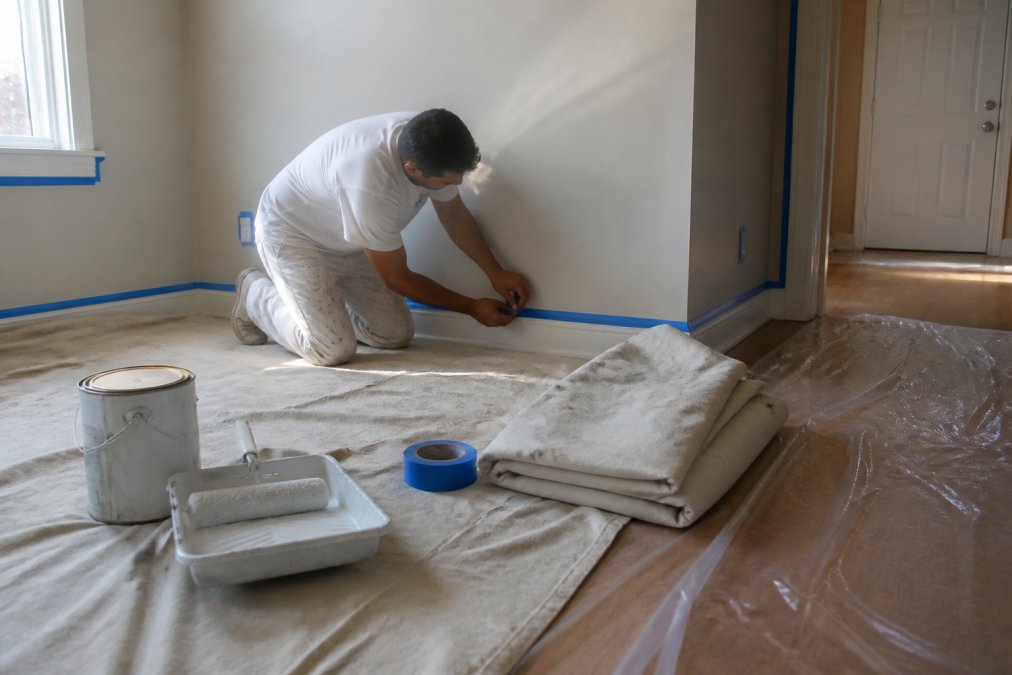
Surface preparation determines whether your paint job lasts years or peels within months. Proper prep includes cleaning walls, filling holes and cracks, sanding rough areas, and protecting surrounding surfaces.
Start with cleaning, walls accumulate dust, grease, and grime that prevent paint adhesion. Professional contractors wash walls with appropriate cleaners and let them dry completely.
Fill holes and cracks with spackling or joint compound, then sand smooth to prevent visible imperfections.
Protect floors, furniture, and trim with drop cloths and painter's tape, quality contractors use plastic sheeting on hardwood floors to prevent drips and overspray.
Prime new drywall, bare spots, or stained areas, primer seals the surface and ensures even topcoat coverage, avoiding extra topcoats later.
Painting Project Timeline: What to Expect
Surface preparation consumes 40-60% of total project time. Understanding realistic timelines helps you identify contractors cutting corners.
Single-Room Interior Painting Timeline
Day 1: Preparation (6-8 hours)
- Moving furniture to center of room or into adjacent space: 30-60 minutes
- Protecting floors with drop cloths and plastic sheeting: 30-45 minutes
- Taping trim, outlets, and fixtures: 45-90 minutes (longer for detailed trim)
- Washing walls with TSP (trisodium phosphate) or appropriate cleaner and allowing to dry: 1-2 hours
- Filling nail holes and cracks with spackling compound: 30-60 minutes
- Sanding filled areas and rough spots: 30-45 minutes
- Vacuuming dust and wiping surfaces: 30 minutes
- Priming bare spots, new drywall, or stained areas: 1-2 hours (includes drying time)
Day 2: First Coat Application (4-6 hours)
- Cutting in (painting edges with a brush before rolling): 1-2 hours
- Rolling walls with first coat: 2-3 hours
- Drying time before second coat: 2-4 hours (varies by paint type and humidity)
Latex paint requires 4 hours minimum between coats; oil-based requires 24 hours.
Day 3: Second Coat and Finishing (4-5 hours)
- Cutting in second coat: 45-90 minutes
- Rolling second coat: 1.5-2.5 hours
- Removing tape while paint is slightly tacky (not fully dry): 30-45 minutes
- Touch-ups and detail work: 30-60 minutes
- Final cleanup and protection of wet paint: 30 minutes
Remove tape while paint is slightly tacky (1-2 hours after application) to avoid peeling or tearing the paint film.
Drying and Curing: Paint reaches full hardness in 7-14 days.
Multi-Room Interior Painting Timeline
For a typical home with 3-4 bedrooms and common areas:
Week 1:
- Days 1-2: Preparation for all rooms (moving furniture, protecting surfaces, filling and sanding, priming)
- Days 3-5: First coats on all rooms
Week 2:
- Days 6-7: Second coats on all rooms
- Days 8-10: Touch-ups, tape removal, final cleanup, and protection of wet surfaces
A whole-house interior project typically takes 10-14 days.
Exterior Painting Timeline
Exterior projects take longer due to weather dependencies and surface complexity:
Preparation Phase (2-4 days):
- Power washing or hand-scraping to remove loose paint and debris: 4-8 hours
- Sanding rough areas and feathering paint edges: 4-8 hours
- Filling cracks and gaps with exterior caulk: 2-4 hours
- Priming bare wood or new caulk: 2-4 hours
- Drying time between steps (weather dependent): 24-48 hours
Application Phase (2-4 days):
- First coat application: 4-8 hours depending on surface area
- Drying time (weather dependent): 24-48 hours
- Second coat application: 4-8 hours
- Drying and curing: 7-14 days before rain exposure
Factors That Extend Timelines
Surface Condition: Heavily damaged or previously painted surfaces require additional prep time. Homes with multiple paint layers, water damage, or mold issues may need 2-3 extra days of preparation.
Planning Around the Project
For interior painting, plan to keep rooms unoccupied during the project. Furniture should remain in the center of the room or moved out entirely. Avoid scheduling the project during high-traffic periods (holidays, when guests are visiting, or during major life events). For exterior painting, plan for limited access to side yards or patios where equipment will be staged.
Services Offered: Interior, Exterior, and Specialty Work
Interior painting covers walls, trim, ceilings, and cabinets. Cabinet painting requires careful preparation and specialized techniques.
Understanding Paint Quality and Material Selection
Paint quality varies dramatically. Here's what separates budget from premium options:
Paint Grade Levels:
- Budget/Contractor Grade: Contains 25-35% solids. Requires three to four coats for full coverage and fails faster in high-moisture areas. Typical cost: $15-$25 per gallon.
- Mid-Grade/Professional Grade: Contains 35-50% solids with better pigment load and binder chemistry. Requires two coats with better durability and washability. Typical cost: $30-$50 per gallon.
- Premium/Architectural Grade: Contains 50%+ solids with superior pigments and advanced binder technology. One-coat coverage possible with exceptional durability and color retention. Typical cost: $50-$85 per gallon.
Interior Paint Types:
- Latex (Water-Based): Low odor, easy cleanup, low VOC. Dries quickly and is ideal for most interior applications.
- Oil-Based (Alkyd): Superior adhesion and durability on trim and doors. Slower drying time (24+ hours between coats) and higher VOC levels. Better for cabinets and high-wear surfaces.
- Acrylic Latex: A hybrid offering latex convenience with improved durability for kitchens and bathrooms.
Reading Reviews and Verifying Credentials
Veteran-owned painting contractors bring military discipline to project management. The Small Business Administration's veteran business resources highlight how veteran entrepreneurs often emphasize reliability, organization, and clear communication. LMJ Bright Painting Services, as a veteran-owned business, brings this structured approach to every project. Their focus on detailed scopes and transparent communication before work begins reflects this commitment to organization and accountability.
| Evaluation Criteria | What to Look For | Red Flags |
|---|---|---|
| Licensing & Insurance | Active state license, current liability insurance, bonding | Unlicensed, no proof of insurance, vague about coverage |
| Communication | Detailed questions during estimate, prompt responses, written scope | Generic quotes, slow to respond, vague about what's included |
| Experience | Specific experience with your project type, relevant references | Limited references, no examples of similar work |
| Preparation Process | Detailed prep steps in estimate, mentions surface priming | Rushes through prep, no mention of primer or filling |
| Timeline Clarity | Realistic timeline accounting for drying time, written schedule | Suspiciously fast timeline, no mention of drying between coats |
| Pricing Transparency | Itemized estimate by room, paint type specified, no surprise add-ons | Lowest bid with vague details, pressure to decide quickly |
Frequently Asked Questions
How long does a professional interior painting project typically take?
Project duration depends on room size, surface condition, and number of coats needed. A typical bedroom may take 2-3 days, while larger spaces or cabinet painting can extend to a week or more. Your contractor should provide a detailed painting project timeline during the estimate phase, including prep work, application, and drying time between coats.
What preparation steps are required before interior painting begins?
Proper preparation is critical for lasting results. Steps include cleaning surfaces, filling holes and cracks, sanding rough areas, protecting trim and fixtures with tape, and laying drop cloths. Quality contractors spend significant time on prep work because it directly affects paint adhesion and final appearance.
What should I look for when hiring a professional painting contractor?
Verify licensing and insurance requirements in your state, check customer reviews and ratings from past projects, ask for written scope documentation before work begins, and confirm the contractor will handle surface preparation carefully. Request an in-person estimate rather than phone quotes, and ensure the contractor explains their process for protecting your home and managing the project timeline.
How do I get an accurate estimate for my painting project?
Use a free interior painting cost estimator that accounts for room dimensions, surface condition, and paint type. Request in-person verification from your contractor, who can identify issues like water damage or uneven surfaces that affect pricing. A reliable estimate includes a detailed cost breakdown, labor hours, materials, and any prep work required.