 Comparison
Eggshell vs Satin Paint: Which Finish Wins
Table of Contents
- What Is Eggshell Paint?
- What Is Satin Paint?
- Key Differences: Eggshell vs Satin Paint Finish
- Best Interior Paint Finishes for High Traffic Areas
- Eggshell vs Satin for Bathrooms
- How to Clean Satin vs Eggshell Paint
- Which Finish Should You Choose?
- Frequently Asked Questions
Last Updated: September 30, 2026
What Is Eggshell Paint?
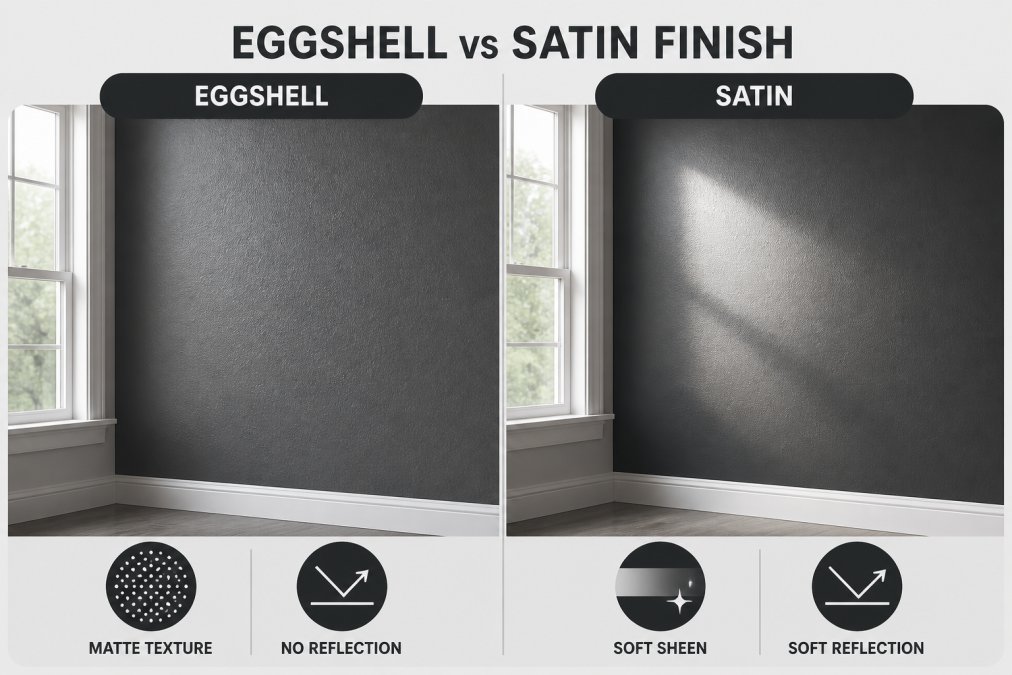
Eggshell paint is an interior finish that sits between flat and satin on the sheen spectrum. It delivers a subtle, low-luster appearance that mimics the texture of an eggshell, hence the name. The finish reflects minimal light, creating a soft, velvety look that works well for most interior walls.
This paint type contains a moderate amount of binder and pigment, which gives it better durability than flat finishes while maintaining that understated aesthetic. Eggshell paint resists scuffs and stains reasonably well, making it suitable for living rooms, bedrooms, and hallways where traffic is moderate. It's easier to clean than flat paint but requires more careful touch-ups than glossier finishes because the sheen level makes patches more noticeable.
At LMJ Bright Painting Services, we recommend eggshell for homeowners who want a balance between aesthetics and practicality. The finish hides minor surface imperfections better than satin, and it doesn't require the same level of wall preparation that higher-gloss finishes demand. One thing to keep in mind: eggshell paint doesn't perform as well in high-moisture environments like bathrooms or kitchens, where washability becomes critical.
What Is Satin Paint?
Satin paint delivers a noticeable soft sheen that catches light more noticeably than eggshell. It sits higher on the glossiness scale, offering better reflectivity without the plastic-like appearance of semi-gloss or gloss finishes. The name comes from the silky, smooth quality of the dried surface.
Satin finishes contain higher binder content, which creates a more durable, washable surface. This makes satin the go-to choice for high-traffic areas, kitchens, and bathrooms where moisture and frequent cleaning are realities. The enhanced scrub resistance means you can wipe down walls without worrying about damaging the finish. Satin paint also resists mildew better than eggshell, a significant advantage in damp spaces.
The trade-off is visibility. Satin's reflective quality means surface imperfections show more clearly under certain lighting conditions. Uneven wall preparation, dust, or minor drywall texture irregularities become more apparent. Touch-ups on satin are also trickier because the sheen difference between new and old paint is more pronounced, requiring careful blending.
Key Differences: Eggshell vs Satin Paint Finish
The choice between eggshell and satin paint finish comes down to three core factors: where you're painting, how much traffic the space receives, and how much maintenance you're willing to do.
Sheen Level and Glossiness
Satin paint reflects noticeably more light than eggshell. This difference affects how the wall looks under various lighting conditions. In bright natural light, satin walls develop a subtle glow. Under artificial lighting, satin becomes even more apparent. Eggshell maintains a consistent, muted appearance regardless of light source.
The reflectivity difference also influences how imperfections appear. A poorly prepared wall under satin finish reveals every bump, dust particle, and texture variation. Eggshell's light absorption masks these issues more effectively. This is why professional painters often recommend eggshell for DIY projects or spaces with older drywall.
Durability and Washability
Satin paint outperforms eggshell in durability and cleaning resistance. The higher binder concentration creates a harder surface that resists scuffs, stains, and marks. You can scrub satin walls repeatedly without degrading the finish. Eggshell tolerates moderate cleaning but shows wear faster in high-traffic areas.
Washability matters in kitchens and bathrooms where grease splatters, soap residue, and moisture accumulate. Satin handles these challenges better. You can wipe satin with a damp cloth or mild cleaner without concern. Eggshell requires gentler handling, aggressive scrubbing can dull or damage the finish.
Moisture resistance also favors satin. The finish resists mildew and mold growth better than eggshell, making it the superior choice for bathrooms, laundry rooms, and basements. Eggshell paint in these spaces may develop mildew over time without proper ventilation.
Surface Imperfections and Light Absorption
Eggshell's matte quality absorbs light rather than reflecting it, which naturally conceals surface irregularities. This makes eggshell forgiving for walls with minor texture, uneven drywall patches, or aging surfaces. The finish creates visual continuity even where wall preparation isn't perfect.
Satin's reflective nature exposes these same imperfections. The light bouncing off the surface highlights every inconsistency. This means satin demands meticulous wall preparation, sanding, filling, and priming become non-negotiable steps. Skipping prep work with satin results in a visibly flawed finish.
The difference becomes dramatic under directional lighting. A satin wall lit by afternoon sunlight reveals imperfections that eggshell would hide. This is why professional painters charge more for satin application, the preparation work is more demanding.
Ease of Application and Touch-Ups
Both finishes apply similarly with standard brushes and rollers. The real difference emerges during touch-ups. Eggshell allows some forgiveness because the matte finish blends imperfections. A patch of fresh paint on an eggshell wall is less noticeable than on satin.
Satin touch-ups require careful technique. The sheen difference between new and existing paint creates a visible line unless you feather the edges skillfully. Many homeowners find satin touch-ups frustrating because achieving a seamless blend is difficult without professional equipment and experience.
This is where working with a professional painting contractor becomes valuable. At LMJ Bright Painting Services, we handle the prep work, application, and finishing details that make the difference between a quality result and a patchy appearance. Our methodical approach to wall preparation and paint application ensures consistent coverage and finish quality.
Best Interior Paint Finishes for High Traffic Areas
High-traffic spaces demand durability and washability. Satin paint is the industry standard for these areas because it withstands daily wear and frequent cleaning. Hallways, entryways, and stairs all benefit from satin's superior scrub resistance.
Kitchens require satin because grease splatters, steam, and spills are inevitable. The washable surface handles these challenges without deteriorating. Satin also resists staining better than eggshell when exposed to cooking residue and moisture.
Children's playrooms and family rooms see heavy use and require frequent cleaning. Satin's durability makes it practical for these spaces. The finish tolerates crayon marks, handprints, and general wear that would damage eggshell.
Bathrooms absolutely require satin due to moisture exposure and cleaning frequency. The mildew resistance and washability make satin essential rather than optional. Eggshell paint in bathrooms is a setup for mold growth and maintenance problems.
Office spaces and commercial areas benefit from satin's durability. The professional appearance combined with easy maintenance makes satin practical for business environments.
Eggshell vs Satin for Bathrooms
Bathrooms present a unique challenge because moisture, temperature fluctuations, and frequent cleaning create harsh conditions. Satin paint is the clear winner for bathroom applications.
The moisture resistance of satin paint prevents mildew and mold growth that commonly affects eggshell in humid environments. Bathroom ventilation helps, but satin provides an additional layer of protection. The finish resists moisture penetration better, maintaining its integrity over years of showers and humidity.
Cleaning frequency in bathrooms also favors satin. You'll wipe bathroom walls regularly to remove soap residue, toothpaste splatter, and moisture. Satin tolerates this repeated cleaning without degrading. Eggshell would show wear quickly under the same treatment.
The only scenario where eggshell might work in a bathroom is a powder room with minimal moisture exposure and infrequent use. Even then, satin is the safer choice. For primary bathrooms with daily showers, satin is non-negotiable.
When planning a bathroom renovation, budget for quality satin paint. The investment in premium satin paint pays dividends through reduced maintenance and longer-lasting results.
How to Clean Satin vs Eggshell Paint
Cleaning approach differs between these finishes because of their durability differences.
Eggshell cleaning requires a gentle touch. Use a soft cloth or sponge with warm water and mild soap. Avoid abrasive scrubbers or harsh chemicals that can dull the finish. For stubborn marks, apply minimal pressure and let the cleaning solution work rather than scrubbing aggressively. Test any cleaner on an inconspicuous area first.
Which Finish Should You Choose?
Your choice depends on room function, traffic level, and moisture exposure.
Choose eggshell when:
- Painting bedrooms, living rooms, or formal dining areas with moderate traffic
- Wall imperfections exist and you want maximum concealment
- You prefer a sophisticated, matte aesthetic
- Touch-up work won't be frequent
- Budget is a consideration, as eggshell typically costs slightly less
Choose satin when:
- Painting kitchens, bathrooms, hallways, or other high-traffic spaces
- Moisture exposure is a factor
- Frequent cleaning and maintenance are expected
- You want maximum durability and scrub resistance
- Wall preparation is thorough and imperfections are minimal
| Finish Type | Best For | Sheen Level | Washability | Touch-Ups | Moisture Resistance |
|---|---|---|---|---|---|
| Eggshell | Bedrooms, living rooms | Low-luster | Moderate | Easier to blend | Lower |
| Satin | Kitchens, bathrooms, high-traffic | Soft sheen | Excellent | Requires care | Excellent |
Frequently Asked Questions
What is the downside of eggshell paint?
Eggshell paint offers lower scrub resistance than satin, making it less ideal for high-traffic areas or rooms where frequent cleaning is needed. Its velvety finish, while attractive, can show dust and fingerprints more easily. In bathrooms and kitchens with moisture exposure, eggshell may not provide the same moisture resistance as satin. Touch-ups can also be more noticeable because the low-luster finish makes it harder to blend repaired areas seamlessly.
Which paint sheen do professional painters recommend for high-traffic areas?
Professional painters typically recommend satin for hallways, kitchens, and commercial spaces because it offers superior washability and scrub resistance. Satin's higher glossiness provides better durability against scuff marks and stains. For bedrooms and living rooms with moderate traffic, eggshell remains a solid choice. The decision depends on how much wear and cleaning the surface will endure, satin wins where durability matters most.
Is eggshell or satin better for bathrooms?
Satin is the better choice for bathrooms because it resists moisture more effectively and handles frequent cleaning without degrading. Its higher binder content makes it more resistant to water spotting and humidity-related damage. Eggshell can work in bathrooms with good ventilation and lower moisture exposure, but satin provides more reliable protection in humid environments. Satin's superior washability also makes it easier to clean soap residue and mildew.
Does eggshell paint hide wall imperfections better than satin?
Yes, eggshell paint hides surface imperfections better because its low-luster finish absorbs light rather than reflecting it. Satin's higher reflectivity can highlight drywall texture, minor dents, and uneven wall preparation. If your walls have visible imperfections, eggshell's light absorption masks these flaws more effectively. However, this advantage diminishes if proper wall preparation and primer compatibility are applied before either finish is used.